20ft and 40ft dry containers
Standard and high-cube supply around Lagos remains depot-, date- and condition-specific.
NGLOS / Gateway briefing
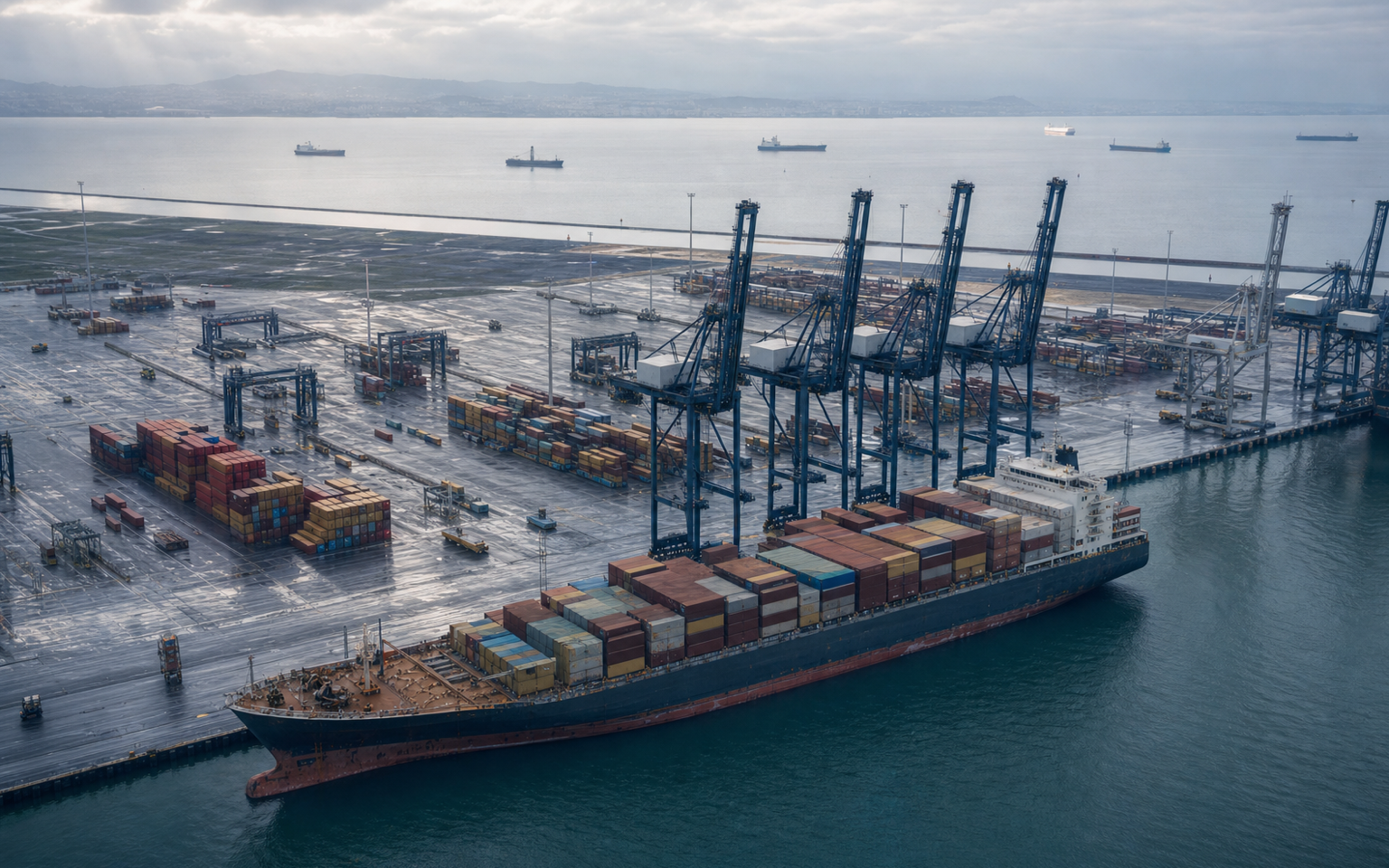
Lagos is Nigeria's main container market: Apapa provides established central terminals, Tin Can Island offers a separate western port complex, and Lekki adds deep-water capacity beside the eastern industrial corridor. Commercial planning should identify the exact terminal and service rather than treating the city label as a complete routing instruction. Cargo readiness, equipment release and documentary cut-offs are connected decisions.
01 / Gateway use
The useful gateway is the booked Lagos terminal, not the city label. Apapa and Tin Can interact with dense urban routes, while Lekki can suit the Lekki Free Zone and eastern projects but creates a different inland journey. VESLR evaluates that gateway role against the actual shipper, consignee and cargo profile, with onward trucking or rail, terminal handling and the destination handoff written into the scope.
03 / Global services
Lagos leases use an approved Apapa depot and realistic urban return cycle.
02Container sales include call-up, secure delivery and destination lifting.
03Forwarding connects terminal release with the authorised truck movement.
04Project cargo planning covers Apapa handling, escort and constrained city routes.
04 / Equipment and operating variables
Standard and high-cube supply around Lagos remains depot-, date- and condition-specific.
Temperature range, pre-trip status, machinery, power and monitoring responsibilities require confirmation.
Payload, concentrated loads, over-dimensions, securing and carrier acceptance are checked for the actual cargo.
Confirm the terminal, truck call-up, urban access window, release and empty-return depot. For Lagos, confirm the responsible party, applicable cut-off and cost consequence before dispatch.
Treat Tin Can as its own port complex with separate gate, traffic and terminal instructions. For Lagos, confirm the responsible party, applicable cut-off and cost consequence before dispatch.
Compare deep-water vessel access with the eastern road leg, free-zone status and final consignee location. For Lagos, confirm the responsible party, applicable cut-off and cost consequence before dispatch.
Long-haul delivery requires route, security, driver, receiving and container-return planning. For Lagos, confirm the responsible party, applicable cut-off and cost consequence before dispatch.
05 / Corridor context
West African services connect Lagos through direct and relayed networks, with inland delivery extending toward Ogun State and national markets.
06 / Related insights

IMO's appeal for 44 captive seafarers should change how logistics teams discuss security: protect crews, verify facts and keep commerce in its proper place.
Read the field note
More berth, yard, crane and reefer capacity strengthens a pivotal Arabian Sea hub. The customer trade-off is greater dependence on planned connections.
Read the field note
Exports accelerated across several goods categories, while imports rose faster. The logistics task is to translate headline growth into lane, equipment and cash-cycle decisions.
Read the field note07 / Alternate gateways
08 / Gateway FAQs
Apapa facilities have distinct operators, gates and cargo roles, so the release, truck call-up and customs record must identify one terminal.
Call-up status, traffic access, secure staging, consignee hours and depot return need alignment before a vehicle enters the port corridor.
Importer records, banking execution, commodity controls and original documents should be verified early because destination correction can be slow.
Source review
Reviewed 2026-07-22. Port capability and service acceptance are checked again for each movement.
VESLR / NGLOS