20ft and 40ft dry containers
Standard and high-cube supply around United Arab Emirates remains depot-, date- and condition-specific.
AE / Corridor-focused coverage
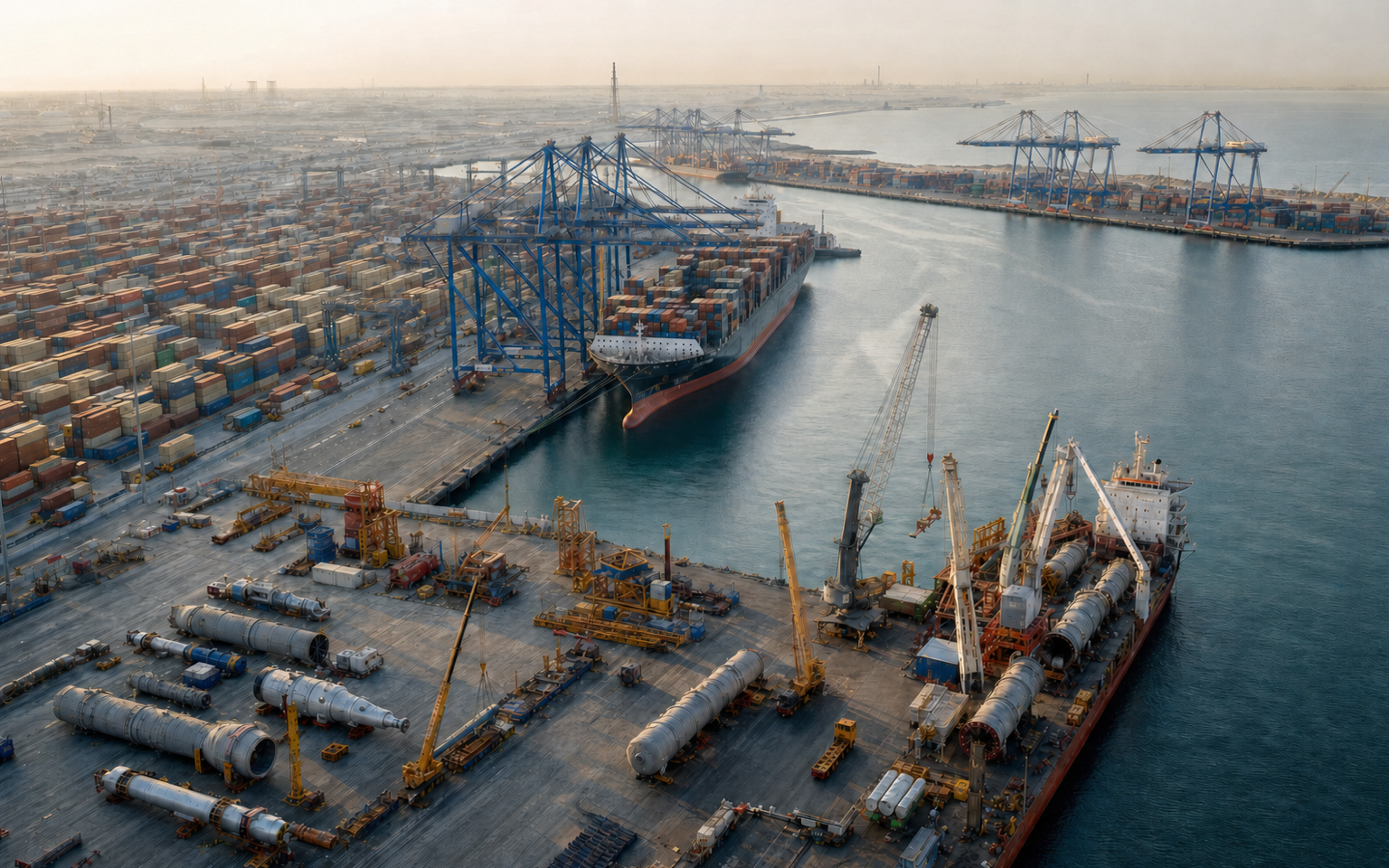
The United Arab Emirates combines a large domestic market with global hub activity across Dubai, Abu Dhabi and the east coast. Jebel Ali, Khalifa Port and Khor Fakkan serve different operating models, so terminal, free-zone status, final emirate and cross-border intent need to be explicit before a route is priced.
01 / Verified market position
02 / Priority gateways
It is a practical hub for UAE imports, exports, transshipment and regional inventory, but the correct design depends on customs status, exact terminal, warehouse location and whether cargo leaves the UAE. VESLR evaluates that gateway role against the actual shipper, consignee and cargo profile, with onward trucking or rail, terminal handling and the destination handoff written into the scope.
02 / AEKHLThe port is relevant when Abu Dhabi consumption, industrial production or project sites are the true hinterland, reducing the need to treat Dubai as the default gateway for every UAE movement. VESLR evaluates that gateway role against the actual shipper, consignee and cargo profile, with onward trucking or rail, terminal handling and the destination handoff written into the scope.
03 / AEKLFIts strength is network connectivity and relay cargo; for local UAE delivery, the mountain road leg, customs arrangement and final emirate should be compared with a Gulf-side arrival. VESLR evaluates that gateway role against the actual shipper, consignee and cargo profile, with onward trucking or rail, terminal handling and the destination handoff written into the scope.
03 / Corridor context
Hub, direct and feeder structures are compared with the extra handling, customs status and inland leg made visible.
UAE leasing matches the release depot to JAFZA, KEZAD, mainland use or an expressly permitted regional redelivery.
02Container sales compare Dubai and Abu Dhabi stock against final-emirate trucking, lifting and zone access.
03Emirates forwarding names the terminal, customs regime and warehouse handoff instead of relying on a city-level route.
04UAE project planning connects port capability with heavy-haul permits, mountain crossings and site method statements.
04 / Equipment and variables
Standard and high-cube supply around United Arab Emirates remains depot-, date- and condition-specific.
Temperature range, pre-trip status, machinery, power and monitoring responsibilities require confirmation.
Payload, concentrated loads, over-dimensions, securing and carrier acceptance are checked for the actual cargo.
The importer, destination emirate, free-zone status and onward intent determine the correct clearance structure. For United Arab Emirates, confirm the responsible party, applicable cut-off and cost consequence before dispatch.
Jebel Ali, Khalifa and Khor Fakkan have distinct operators, service patterns and landside procedures. For United Arab Emirates, confirm the responsible party, applicable cut-off and cost consequence before dispatch.
Cross-border or feeder distribution needs separate carrier, customs, equipment and delivery confirmation. For United Arab Emirates, confirm the responsible party, applicable cut-off and cost consequence before dispatch.
05 / Working method
Compare the named origin or destination with the cargo location, sailing pattern and inland handoff.
Set dimensions, weight, condition, release point and acceptance requirements before commercial comparison.
Assign documents, cut-offs, delivery, unloading and redelivery to responsible parties and dates.
06 / Sectors
07 / Related insights

The port's strongest container year since 2015 points to robust regional flows. It also raises practical questions about peaks, equipment and inland capacity.
Read the field note
Jebel Ali's round-the-clock electric deployment joins vehicles, charging and software. That integrated approach matters more than a vehicle count.
Read the field note
IMO's warning removes any ambiguity: when credible security assurances are absent, a commercial schedule cannot take priority over seafarers' lives.
Read the field note08 / Local FAQs
Jebel Ali or Khalifa can suit mainland, free-zone and industrial flows when the destination emirate and customs status support that approach.
Its Gulf of Oman position is valuable for relay networks, while local delivery must include the mountain road leg and exact customs handoff.
No. Importer, zone, terminal and onward intent determine the declaration and release path for each movement.
Source review
Reviewed 2026-07-22. Operational availability is reconfirmed for each enquiry.
VESLR / United Arab Emirates