20ft and 40ft dry containers
Standard and high-cube supply around Nigeria remains depot-, date- and condition-specific.
NG / Network-coordinated coverage
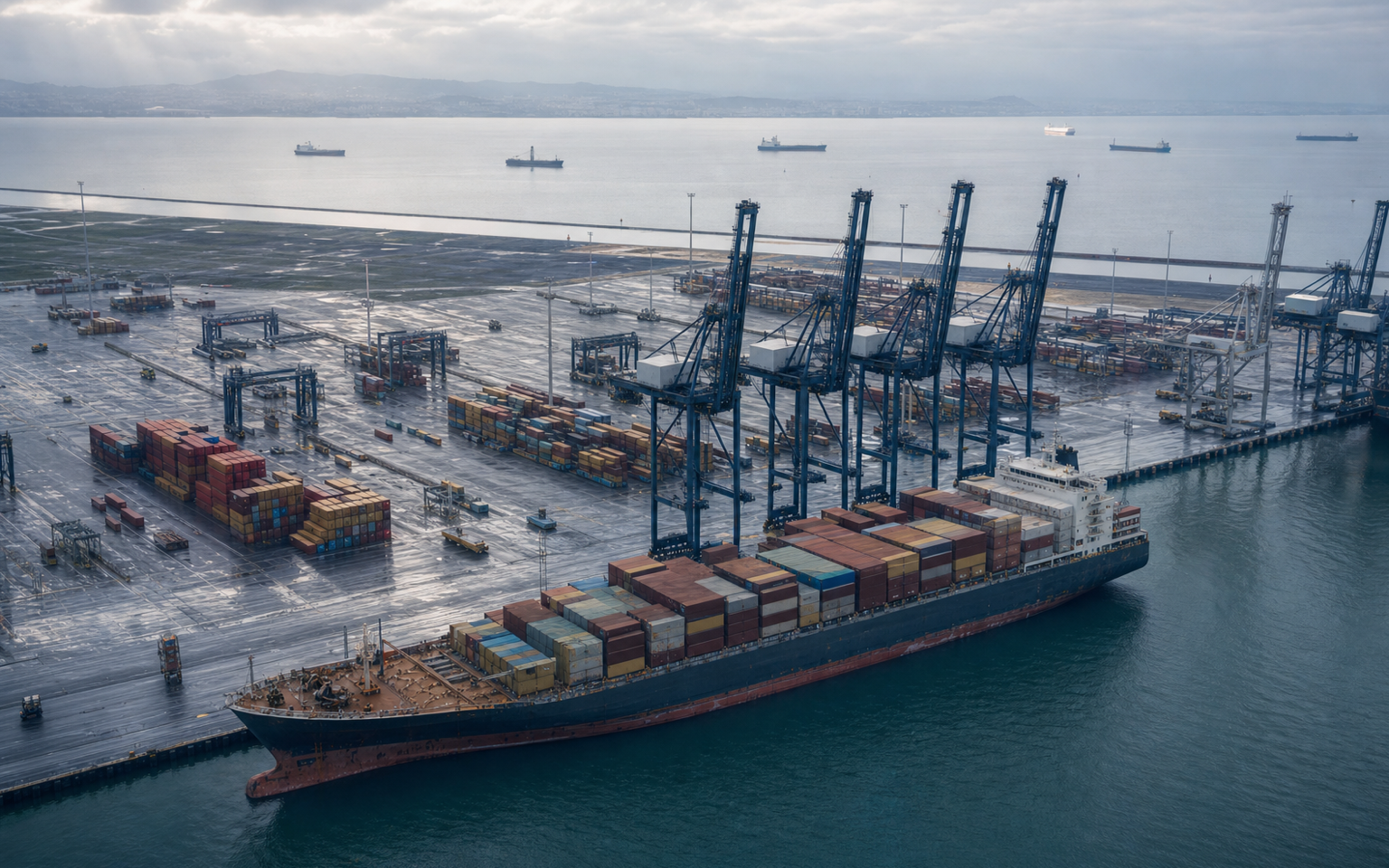
Nigeria's launch coverage is centred on the Lagos port market, where Apapa, Tin Can Island and the newer deep-water facilities at Lekki serve different terminal, cargo and hinterland patterns. They are presented as operating modules within one Lagos page because a shipment needs a terminal decision, not three duplicated city pages.
01 / Verified market position
02 / Priority gateways
03 / Corridor context
Container services connect Lagos with global hubs while the terminal and final Nigerian delivery are scoped as local operating decisions.
Nigeria leasing uses a named Lagos release depot and allows for call-up queues, delivery and urban empty return.
02Container sales include secure site transport, lifting and the distinct road economics of Apapa or Lekki.
03Forwarding coordinates importer records, banking execution, terminal release and authorised truck movement.
04Nigerian project cargo planning covers facility acceptance, city access, escort and inland route constraints.
04 / Equipment and variables
Standard and high-cube supply around Nigeria remains depot-, date- and condition-specific.
Temperature range, pre-trip status, machinery, power and monitoring responsibilities require confirmation.
Payload, concentrated loads, over-dimensions, securing and carrier acceptance are checked for the actual cargo.
Apapa, Tin Can and Lekki have different approaches, operators and inland economics. For Nigeria, confirm the responsible party, applicable cut-off and cost consequence before dispatch.
Documents, banking execution and cargo controls should be confirmed before origin loading. For Nigeria, confirm the responsible party, applicable cut-off and cost consequence before dispatch.
Truck call-up, route, daylight rules and secure handoffs affect delivery and empty return. For Nigeria, confirm the responsible party, applicable cut-off and cost consequence before dispatch.
05 / Working method
Compare the named origin or destination with the cargo location, sailing pattern and inland handoff.
Set dimensions, weight, condition, release point and acceptance requirements before commercial comparison.
Assign documents, cut-offs, delivery, unloading and redelivery to responsible parties and dates.
06 / Sectors
07 / Related insights

IMO's appeal for 44 captive seafarers should change how logistics teams discuss security: protect crews, verify facts and keep commerce in its proper place.
Read the field note
More berth, yard, crane and reefer capacity strengthens a pivotal Arabian Sea hub. The customer trade-off is greater dependence on planned connections.
Read the field note
Exports accelerated across several goods categories, while imports rose faster. The logistics task is to translate headline growth into lane, equipment and cash-cycle decisions.
Read the field note08 / Local FAQs
They are distinct terminal modules within one commercial city market; the booking needs the exact facility without duplicating city guidance.
Importer documents, cargo controls, banking execution and terminal instructions need verification before origin loading.
Call-up requirements, route security, receiving hours and empty return can control the delivery more than the ocean schedule.
Source review
Reviewed 2026-07-22. Operational availability is reconfirmed for each enquiry.
VESLR / Nigeria