20ft and 40ft dry containers
Standard and high-cube supply around South Africa remains depot-, date- and condition-specific.
ZA / Network-coordinated coverage
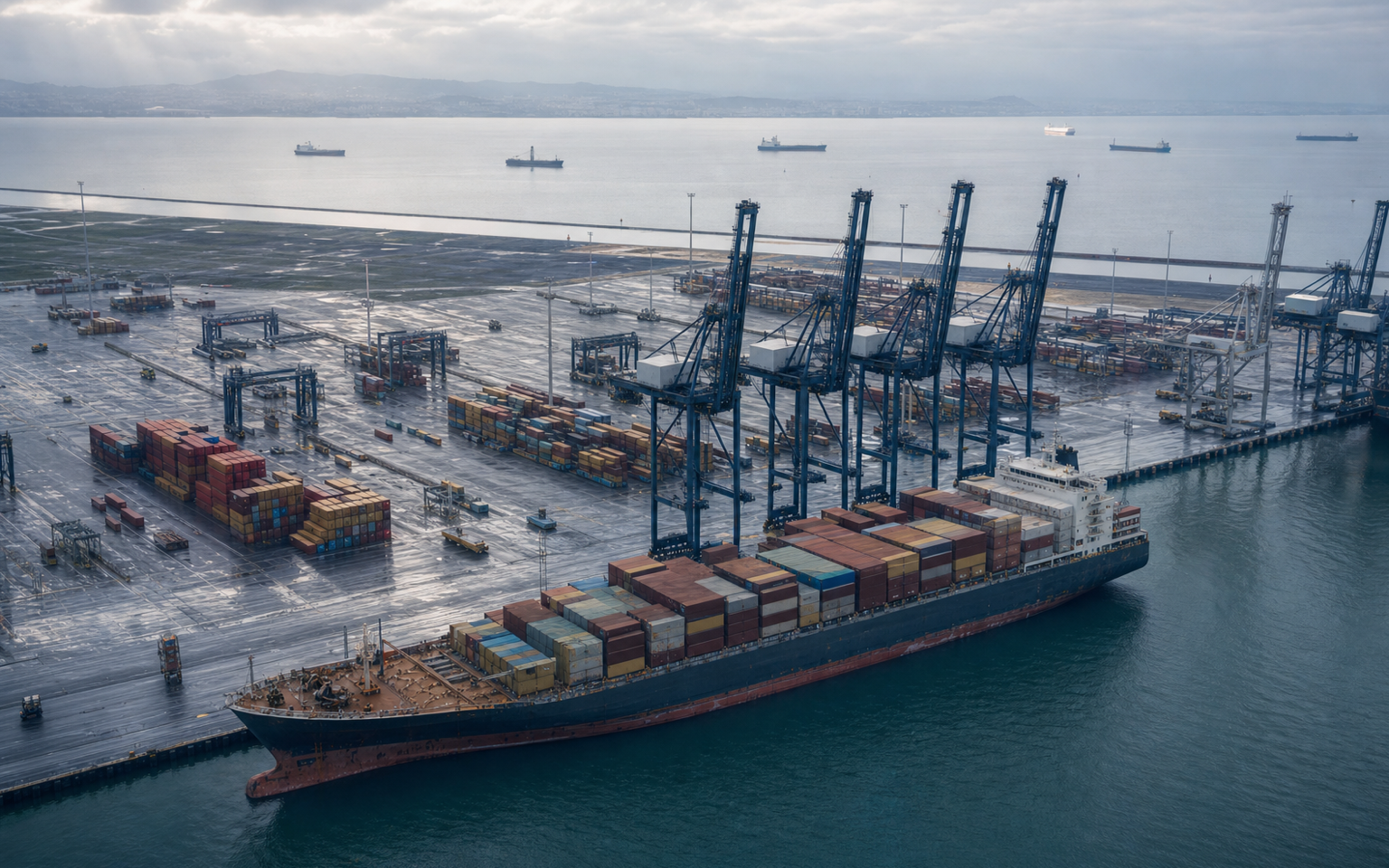
South Africa's launch gateways divide naturally by coast and hinterland. Durban is the principal container gateway for Gauteng and KwaZulu-Natal through the country's busiest inland freight corridor, while Cape Town supports the Western Cape, refrigerated exports and Atlantic service patterns.
01 / Verified market position
02 / Priority gateways
It suits eastern and inland cargo where the complete port-to-Gauteng chain is available, with terminal congestion and long-haul equipment turn time included. VESLR evaluates that gateway role against the actual shipper, consignee and cargo profile, with onward trucking or rail, terminal handling and the destination handoff written into the scope.
02 / ZACPTThe port suits Western Cape producers and importers when seasonal reefer peaks, wind exposure and depot positioning are planned well before cargo readiness. VESLR evaluates that gateway role against the actual shipper, consignee and cargo profile, with onward trucking or rail, terminal handling and the destination handoff written into the scope.
03 / Corridor context
Gateway selection follows the production region, reefer or dry requirements, inland capacity and current carrier rotation.
South Africa leasing prices the long equipment cycle between coastal depots, Gauteng demand and approved redelivery.
02Container sales include secure inland transport, destination lifting and realistic Western or eastern corridor mileage.
03Forwarding connects Durban truck capacity or Cape Town cold-chain timing to terminal operating windows.
04Project cargo work integrates harbour capability, escorted routes, bridge checks and industrial-site readiness.
04 / Equipment and variables
Standard and high-cube supply around South Africa remains depot-, date- and condition-specific.
Temperature range, pre-trip status, machinery, power and monitoring responsibilities require confirmation.
Payload, concentrated loads, over-dimensions, securing and carrier acceptance are checked for the actual cargo.
Berth windows, stacks and truck appointments can materially affect cargo planning. For South Africa, confirm the responsible party, applicable cut-off and cost consequence before dispatch.
Rail availability, road capacity, security and empty return are part of the quote. For South Africa, confirm the responsible party, applicable cut-off and cost consequence before dispatch.
Terminal, cold-chain and vessel contingencies should be defined for sensitive cargo. For South Africa, confirm the responsible party, applicable cut-off and cost consequence before dispatch.
05 / Working method
Compare the named origin or destination with the cargo location, sailing pattern and inland handoff.
Set dimensions, weight, condition, release point and acceptance requirements before commercial comparison.
Assign documents, cut-offs, delivery, unloading and redelivery to responsible parties and dates.
06 / Sectors
07 / Related insights

IMO's appeal for 44 captive seafarers should change how logistics teams discuss security: protect crews, verify facts and keep commerce in its proper place.
Read the field note
More berth, yard, crane and reefer capacity strengthens a pivotal Arabian Sea hub. The customer trade-off is greater dependence on planned connections.
Read the field note
Exports accelerated across several goods categories, while imports rose faster. The logistics task is to translate headline growth into lane, equipment and cash-cycle decisions.
Read the field note08 / Local FAQs
Durban usually serves KwaZulu-Natal and Gauteng; Cape Town aligns with Western Cape demand and seasonal refrigerated exports.
Long road or rail corridors, security, depot return and capacity can outweigh small differences in the ocean leg.
Durban can face heavy seas while Cape Town wind closures are a recurring terminal consideration, especially during export peaks.
Source review
Reviewed 2026-07-22. Operational availability is reconfirmed for each enquiry.
VESLR / South Africa