20ft and 40ft dry containers
Standard and high-cube supply around Singapore remains depot-, date- and condition-specific.
SG / Network-coordinated coverage
Singapore is a global transshipment and maritime-services hub at the meeting point of major east–west and intra-Asian routes. Its port role is highly networked: a Singapore call may represent local import, export, consolidation or a relay between vessels, each with different documentation and equipment consequences.
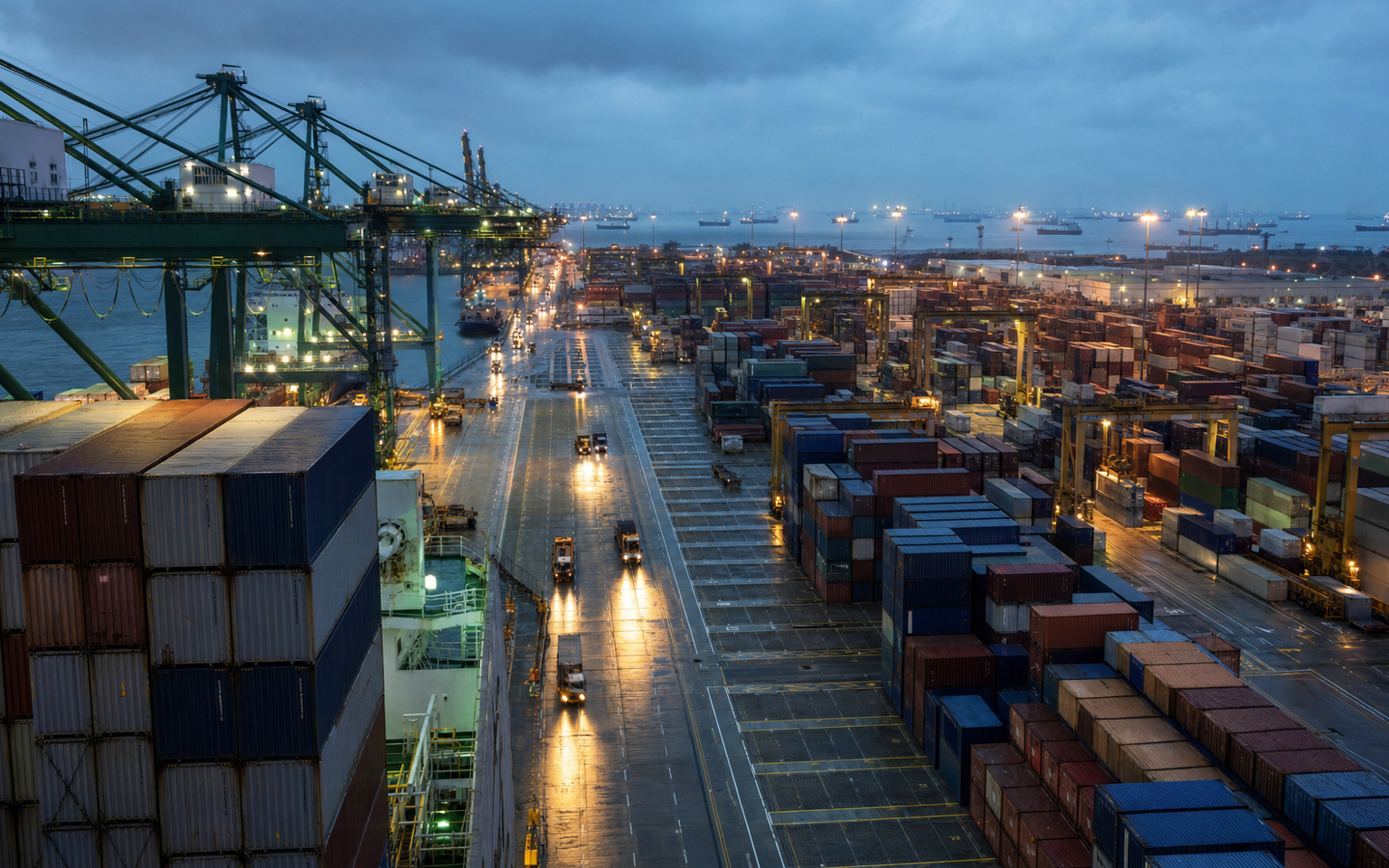
01 / Verified market position
02 / Priority gateways
03 / Corridor context
Mainline and feeder networks make Singapore a routing and consolidation node, with relay details and total elapsed time made explicit.
Singapore leasing distinguishes locally released equipment from units that remain inside a through transshipment move.
02Container sales include urban delivery rules, restricted access and lifting at the final city-state location.
03Forwarding protects vessel pairing, inter-terminal transfer and recovery options across the Singapore hub.
04Singapore project cargo checks port handling, road permits and controlled-commodity approvals before mobilisation.
04 / Equipment and variables
Standard and high-cube supply around Singapore remains depot-, date- and condition-specific.
Temperature range, pre-trip status, machinery, power and monitoring responsibilities require confirmation.
Payload, concentrated loads, over-dimensions, securing and carrier acceptance are checked for the actual cargo.
Inbound vessel reliability, terminal transfer and outbound cut-off determine connection resilience. For Singapore, confirm the responsible party, applicable cut-off and cost consequence before dispatch.
Customs, storage and document requirements differ for Singapore imports and transshipment units. For Singapore, confirm the responsible party, applicable cut-off and cost consequence before dispatch.
Declarations, terminal rules and carrier acceptance must be secured before loading at origin. For Singapore, confirm the responsible party, applicable cut-off and cost consequence before dispatch.
05 / Working method
Compare the named origin or destination with the cargo location, sailing pattern and inland handoff.
Set dimensions, weight, condition, release point and acceptance requirements before commercial comparison.
Assign documents, cut-offs, delivery, unloading and redelivery to responsible parties and dates.
06 / Sectors
07 / Related insights

A new container high received the headline. The more useful story is how temporary berths, labour, scheduling and night operations answered congestion.
Read the field note
UNCTAD expects fragile growth while fleet, route and regulatory costs keep changing. Operators need scenarios, not a single market story.
Read the field note
The port's strongest container year since 2015 points to robust regional flows. It also raises practical questions about peaks, equipment and inland capacity.
Read the field note08 / Local FAQs
That distinction sets customs, storage, terminal-transfer and document responsibilities and must be known before routing.
Both vessel calls, terminal compatibility, minimum connection time and a recovery option should be visible in the plan.
Dangerous goods, controlled commodities and temperature-sensitive units require correct declarations and terminal or carrier approval.
Source review
Reviewed 2026-07-22. Operational availability is reconfirmed for each enquiry.
VESLR / Singapore