The short answer
Verify the seller’s right to sell, the actual unit and condition, certification needs, intended use, inspection evidence, delivery method and total landed cost before buying.
1. Is this the actual unit—and can it be sold?
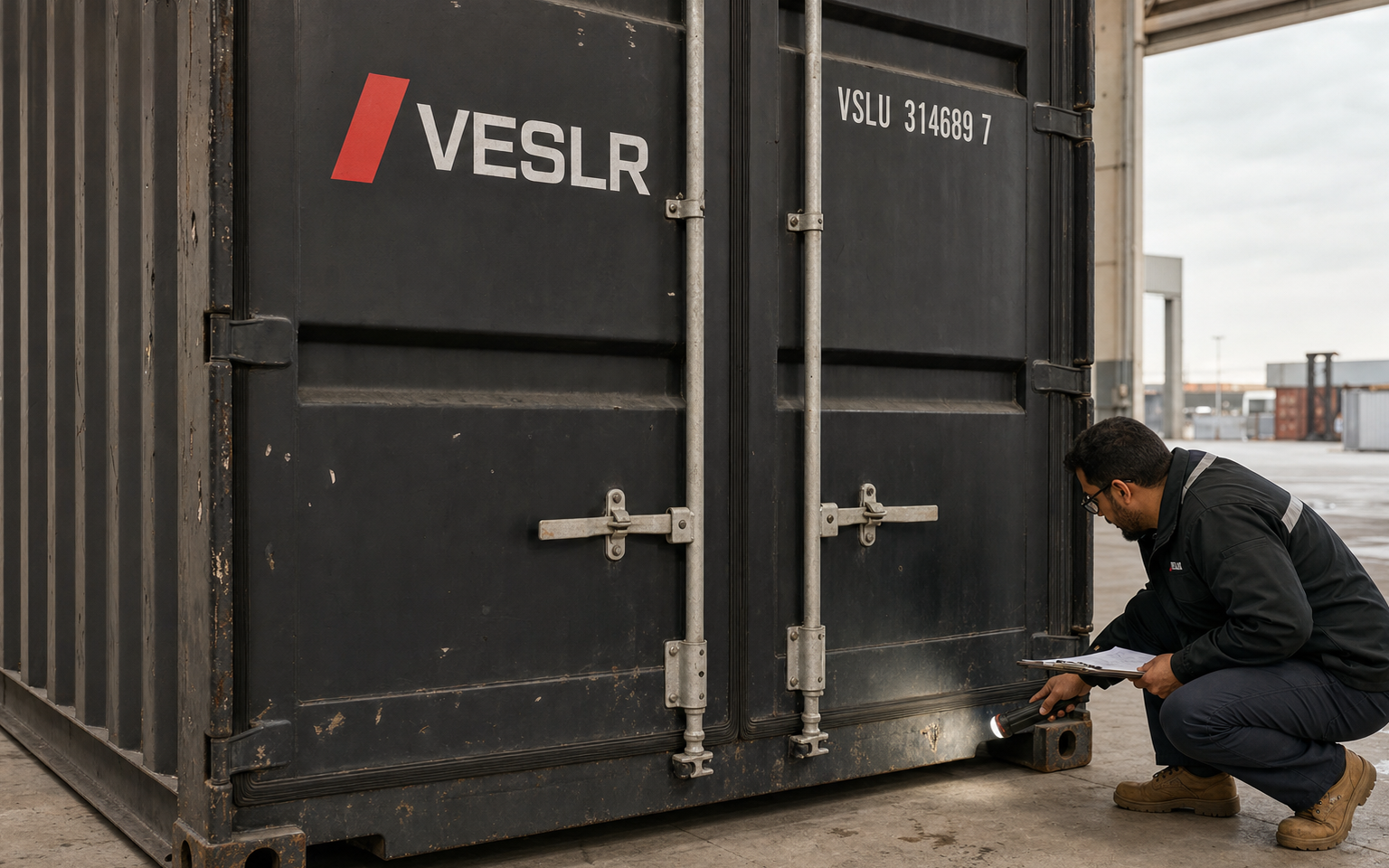
Ask for the container number, photographs of the exact unit and confirmation that the seller has clear authority to transfer it. Check that identification has not been altered and that no lease or finance claim remains. A generic catalogue image is not evidence of condition. Record the sale document, unit number, price, taxes, collection point and transfer terms.
2–3. What does the condition label mean, and who inspected it?
Request the seller’s written definition of cargo-worthy, wind-and-watertight or as-is. Ask for the inspection date, inspector and report. Review structure, doors, seals, floor, roof, walls and underside. If the container will carry cargo, confirm the relevant transport and safety requirements through a qualified survey. Storage use can tolerate different defects, but water ingress, contamination and unsafe structure still matter.
4–5. Does it fit the use, and may it be modified?
Define whether the unit is for export, domestic transport, storage, conversion or project support. Check dimensions, doors, ventilation, insulation, payload and stacking needs. Cutting openings, adding heavy equipment or changing structure can affect strength and approvals. Plan modifications with competent engineering and local requirements. A refrigerated shell without working machinery is not equivalent to an operating reefer.
6–7. How will it arrive, and what is the total cost?
Confirm collection deadline, truck or chassis, lifting, route access and site placement. The buyer may need a crane or side-loader and a level supported surface. Add inspection, repairs, cleaning, transport, lifting, taxes and modification to the purchase price. Also plan the exit: reuse, resale or disposal. A cheap unit at a distant depot can be a poor landed purchase.
Seven questions, one purchase file
- Who owns and can sell the unit?
- Is this the actual container?
- What does the condition grade mean?
- Who inspected it and when?
- Does it fit the intended use?
- How will it be delivered and placed?
- What is the complete landed cost?


