The short answer
Singapore's Maritime and Port Authority reported on 15 January 2025 that the port handled a record 41.12 million TEU in 2024, with about 90% of volume transshipped. More instructively, it listed the measures used against mid-year congestion: new Tuas berths, reactivated capacity at Keppel, more manpower, schedule coordination and night tow operations. Resilience came from several reversible actions working together, not from one permanent expansion alone.
The record sits inside an unusually demanding network role
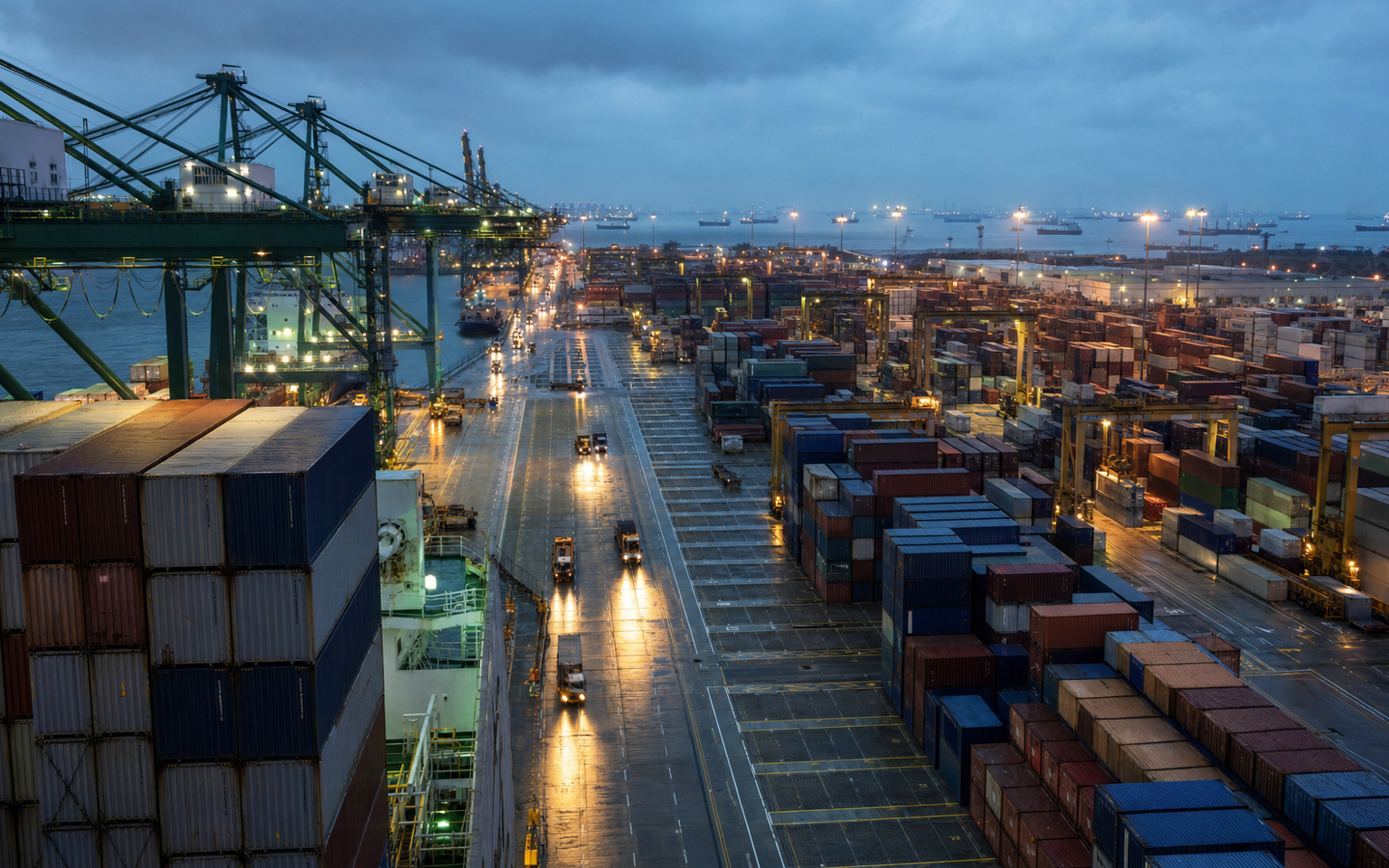
MPA said Singapore's container throughput grew 5.4% to 41.12 million TEU in 2024, crossing 40 million for the first time. It also said around 90% of the total was transshipment cargo. That distinction is central. Most boxes are not beginning or ending their commercial journey in Singapore; they are changing vessel or service there. Each delayed arrival can therefore affect an onward connection, yard position and later port call. The headline volume demonstrates the scale of the hub, while the transshipment share explains why schedule volatility can become operational pressure quickly. For shippers, a Singapore routing should be assessed around connection quality and service recovery, not simply around the reputation or total throughput of the port.
The congestion response used several operational levers
MPA linked mid-2024 congestion to the effects of altered shipping patterns and described a coordinated response. New berths at Tuas were commissioned, berths and yard space at Keppel were reactivated, manpower capacity increased, schedules were optimized with shipping and feeder lines, and night tow operations for container barges were permitted. This is a useful resilience pattern. Add physical capacity where possible, recover dormant capacity, extend the operating window, bring in people and improve coordination. Not every port can copy each action, but operators can use the same categories in contingency planning. A response plan that depends only on building new infrastructure will arrive too late for a live disruption. Temporary and procedural capacity deserve a place beside capital projects.
Schedule coordination is a form of capacity
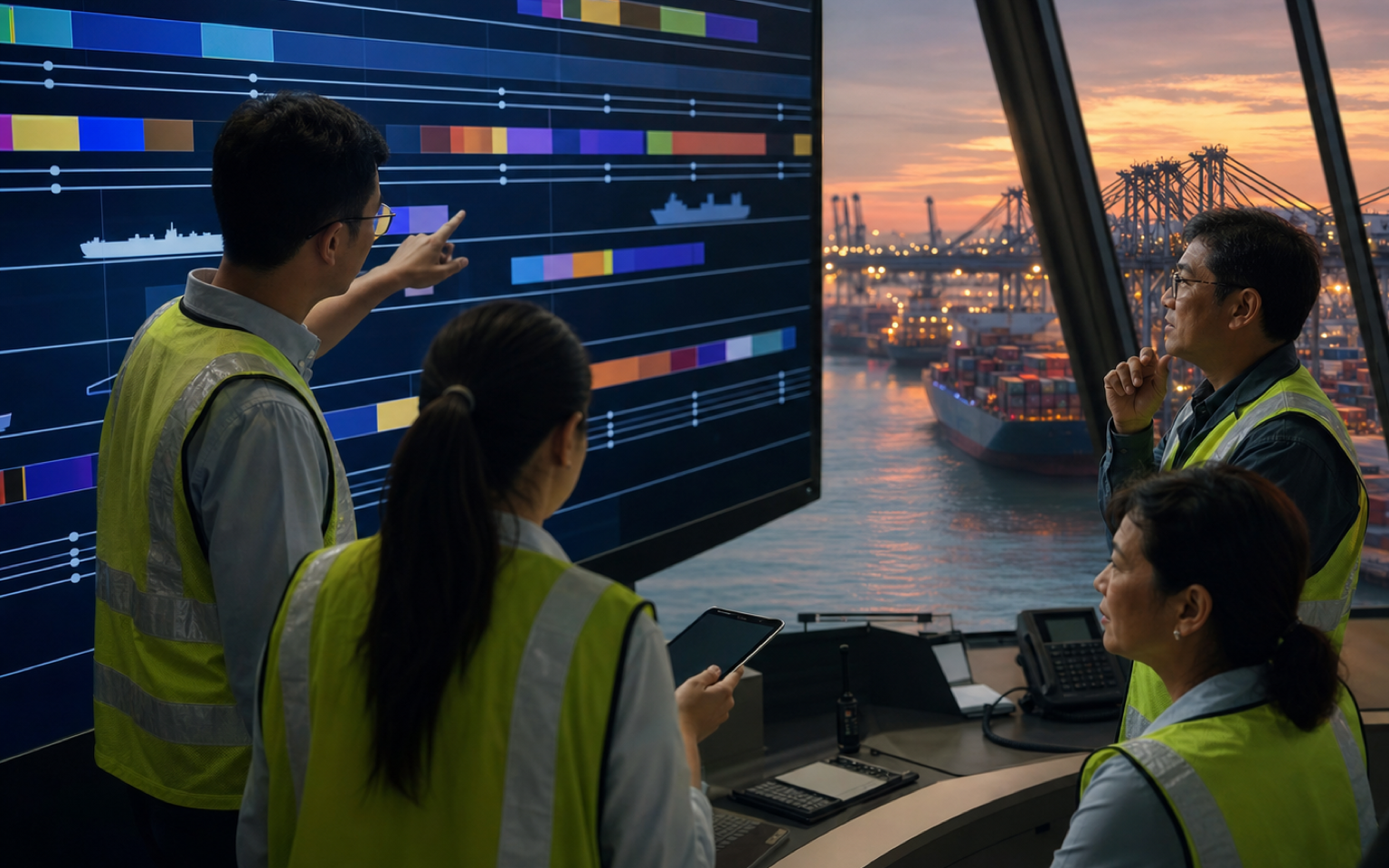
A berth or yard slot cannot be used well if the next vessel time is stale or the expected container exchange is wrong. MPA's reference to working with mainline and feeder operators on schedules points to a less visible kind of capacity: dependable shared information. Shippers and forwarders contribute by sending correct booking, weight, dangerous-goods and documentation data on time. They should also treat estimated arrival as a changing operational signal, not a promise to a warehouse or customer. When the hub, carrier, feeder and consignee work from different timestamps, physical capacity is wasted through premature trucks, missed cut-offs and unnecessary restows. Better data does not create another berth, but it helps the existing network use one more effectively.
Phased expansion needs transition planning
MPA reported that 11 berths at Tuas Port were operating and seven more were expected by 2027, while Phase 2 reclamation was about three-quarters complete at the time of the release. Large port transitions do not happen in one switch. Services, equipment, labour and systems move in stages, sometimes while legacy facilities remain important for surge capacity. Cargo owners do not need to manage the terminal programme, but they do need accurate terminal and cut-off information for every booking. A familiar service name may shift facility or process. Delivery and transshipment assumptions should be checked against the live booking confirmation. The strategic direction is more capacity and consolidation at Tuas; the operational reality is a multi-year transition that rewards current information.
Longer routes connect port demand with fuel demand
Singapore also reported record bunker sales in 2024 and said increased demand was partly linked to longer Asia–Europe voyages around the Cape of Good Hope. This is a reminder that a route disruption changes more than transit time. It can alter fuel demand, vessel cycles, arrival bunching and the number of ships required to maintain a weekly service. Those effects reach container availability and freight pricing. A shipper cannot manage bunker markets, but it can avoid building plans around a narrow point estimate. Use a range for transit and arrival, identify inventory that protects the business from a late connection, and keep urgent cargo separate where justified. The port data provides evidence that operational rerouting has system-wide consequences.
Resilience should be designed as a ladder of actions
Singapore's response suggests a practical sequence for businesses too. First, improve visibility: know which box, vessel, hub and connection matter. Second, recover slack already available, such as an earlier document review or alternate delivery slot. Third, add temporary capacity, perhaps through a second warehouse window or qualified trucker. Fourth, change the route only when the impact warrants the added cost and complexity. Finally, record the result for the next disruption. A resilient plan is not the most complicated plan; it is one with credible actions that can be activated in order. Singapore's record throughput is impressive, but the stronger lesson is the disciplined combination of infrastructure, people, hours and information used to keep the hub moving.
Build a transshipment-resilience ladder
- Track the inbound vessel and the planned onward connection separately
- Confirm the live terminal, cut-off and cargo-availability status
- Keep destination appointments flexible until the connection is firm
- Identify a second service or later connection for critical flows
- Protect priority inventory with an explicit time buffer
- Record where missing or stale data caused avoidable work