The short answer
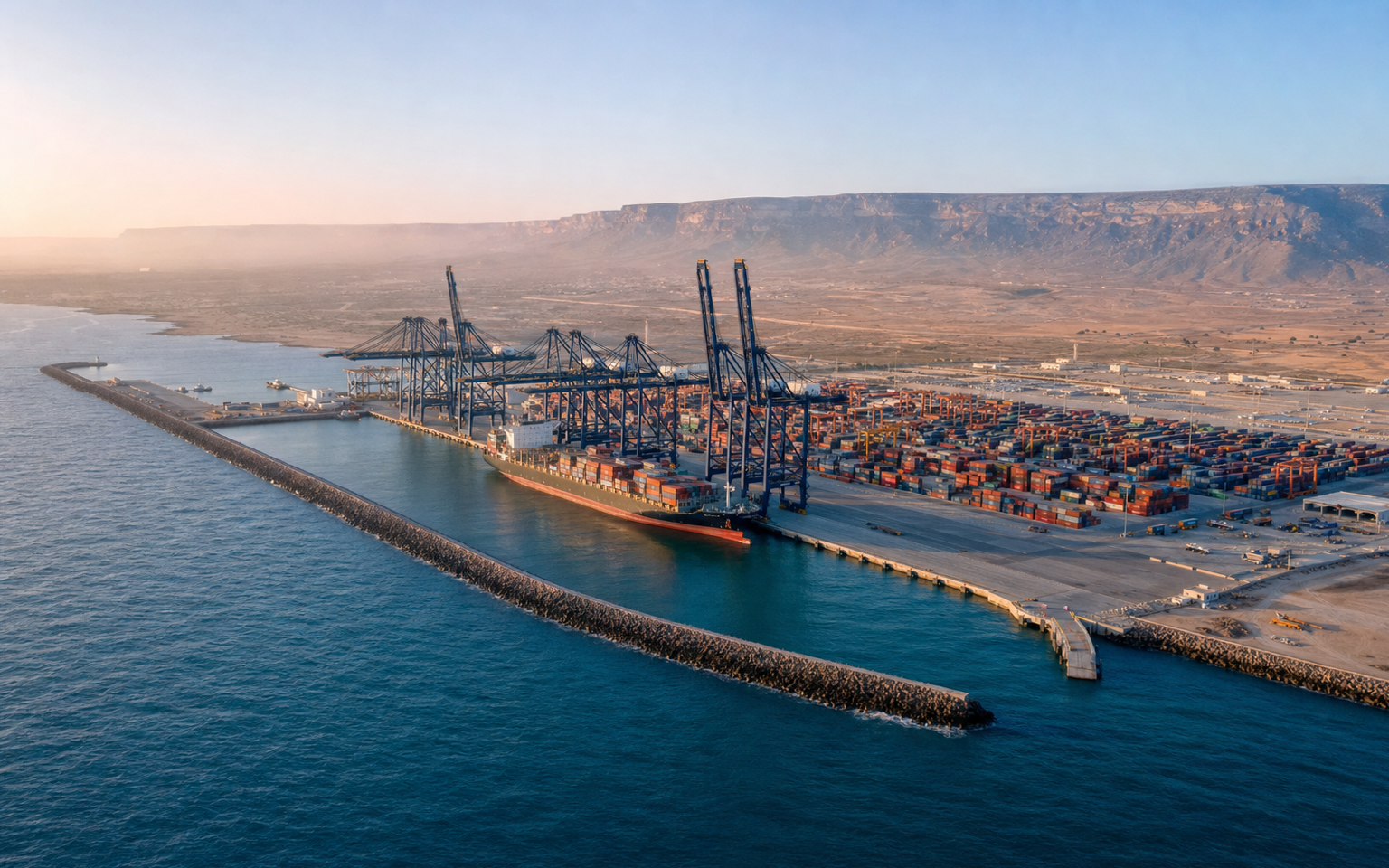
The Port of Salalah said on 19 February 2025 that a USD 300 million expansion had raised container-terminal capacity from 4.5 million to 6.5 million TEU and prepared the port for the Gemini Cooperation hub network. For shippers, the opportunity is a larger, well-equipped connection point between Asia, the Middle East and East Africa. The discipline is to plan transshipment, feeder frequency, reefer continuity and exception recovery explicitly.
This is a system upgrade, not one equipment purchase
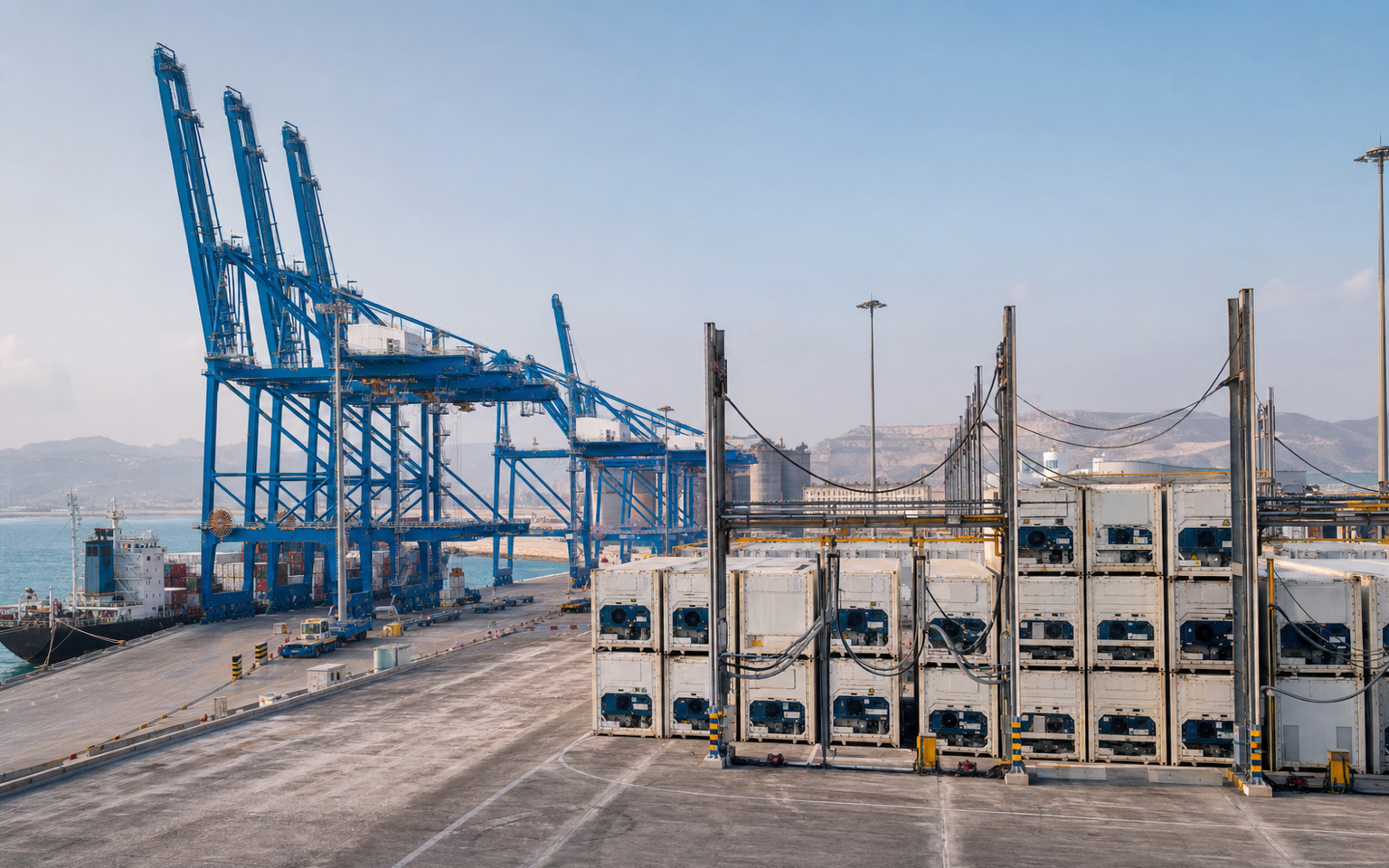
The Port of Salalah described an expansion across all six existing berths and the yard, supported by a new access road and electrical upgrades. It listed ten new ship-to-shore cranes, hybrid yard cranes, reach stackers, empty-container handlers, terminal trucks and trailers. It also reported an expansion to 2,000 reefer plugs. Those components matter together. A bigger crane can work a larger ship, but the box still needs a yard position, a transfer move, data that identifies its next leg and, for a reefer, dependable power and monitoring. The port's announcement presents the investment as readiness for changing network needs. Cargo owners should read the package as evidence of capability while still confirming the specific terminal, service and equipment conditions for their booking.
Hub-led networks exchange directness for controlled connections
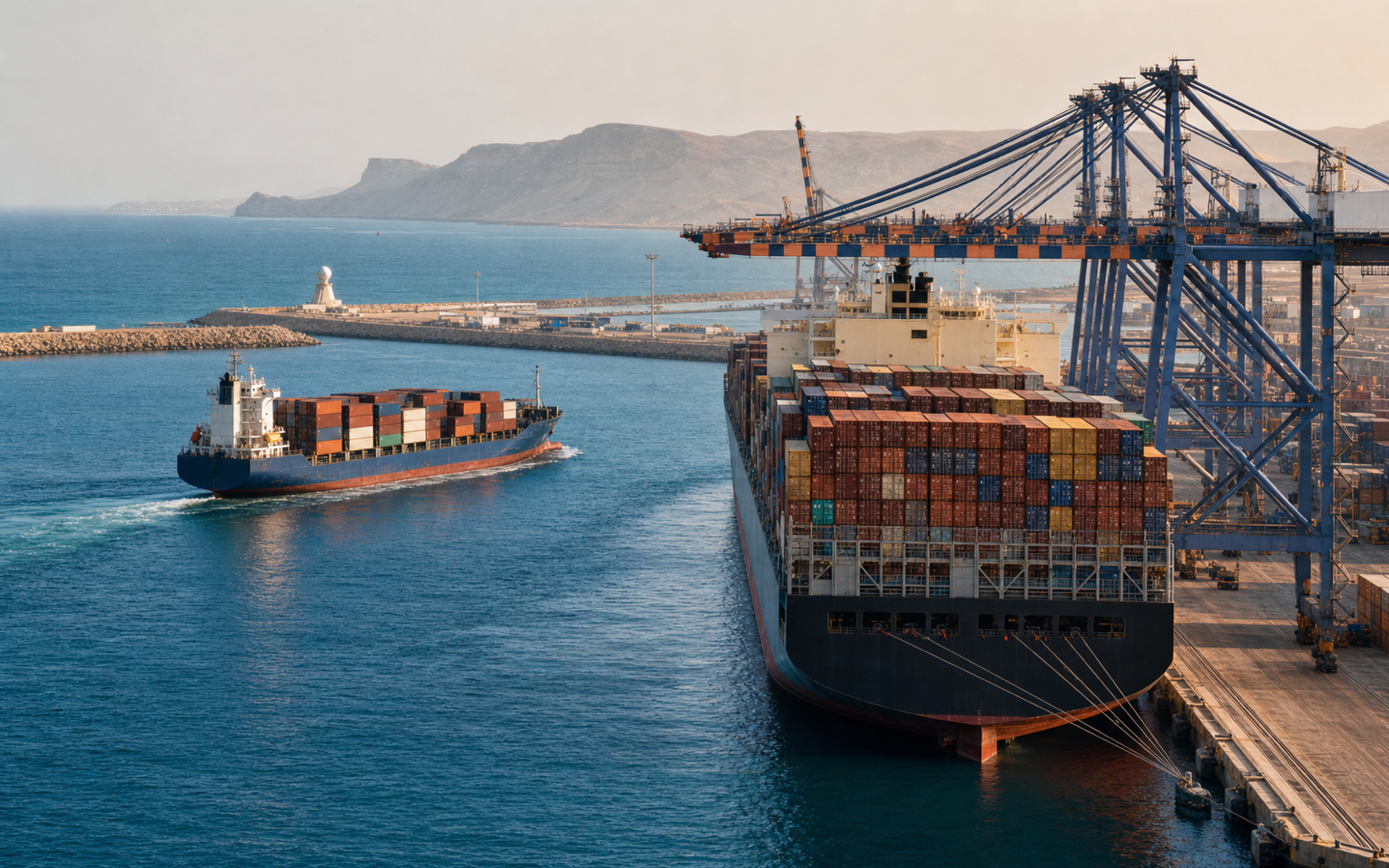
Salalah said it would serve as a primary hub in the Gemini Cooperation, with the first Gemini vessel call scheduled for 18 February 2025. A hub-and-shuttle design concentrates mainline calls at selected ports and uses connected services to reach a wider range of origins and destinations. That can support consistent mainline operations, but the shipper's journey may include a planned transfer. The correct comparison is not direct versus transshipment as labels. It is the complete schedule, including the reliability of the connection, frequency of the onward service, cargo availability rules and recovery option if the planned link is missed. Some hub routings can outperform a nominally direct service; others may add a critical dependency. Ask for the actual port sequence and planned handoff.
Salalah's geography creates several distinct corridor cases
The port positions itself for access to the Middle East, Indian Subcontinent and East Africa from the main East–West lane. Those regions should not be treated as one route. Upper-Gulf cargo may depend on a feeder connection and destination-specific equipment balance. East African cargo may face different frequency and port constraints. India-origin freight begins with a factory-to-gateway move whose cost and timing can determine whether the Salalah option is attractive. Build each corridor from the cargo-ready location to the final delivery point. Then compare the Salalah connection with available alternatives on the same scope. Geography creates opportunity, but a practical corridor is made from service frequency, handoff quality and the customer's deadline.
More reefer plugs expand capability, not product tolerance
The reported reefer expansion is especially relevant to food, pharmaceutical and other temperature-managed supply chains. Plug capacity at a hub reduces one infrastructure constraint; it does not correct poor cargo preparation. The shipper still needs the right pre-carriage temperature, packaging and airflow, a verified set point, ventilation settings where applicable and accurate commodity information. The booking should identify who monitors the unit at each custody point and who responds to an alarm or missed connection. Ask how data is made available and what evidence is retained. A longer dwell may be operationally safe if power and monitoring are controlled, while a shorter nominal transit can still fail if the product was loaded warm or airflow was blocked.
Ultra-large vessel capability can reshape downstream peaks
Salalah said the new ship-to-shore cranes can handle vessels 26 containers wide. Serving larger mainline ships can concentrate more exchange activity into each call. That may improve network economics, but it can also create sharper workloads for yard, feeder and landside operations around the call window. A customer should not infer congestion from vessel size alone; the expansion is designed to manage that scale. The operating response is to watch live milestones and preserve realistic buffers between cargo availability and the next commitment. For critical cargo, define what happens if the vessel window shifts. Warehouse labour, truck bookings and customer appointments should follow a confirmed release signal rather than a static long-range estimate.
Test the hub model against the cargo's real priority
A procurement team can compare hub routings using five practical measures: total expected time, range of likely arrival, connection frequency, exception recovery and complete cost. Add cargo sensitivity. A stable industrial input may tolerate a wider window if the service offers good value. A short-life reefer, project milestone or production-stopping component may justify a different buffer or route. Equipment terms matter too, especially where a leased unit or carrier box ends in a market with limited redelivery options. The Port of Salalah announcement demonstrates material investment and a defined network role. It does not make every movement automatically superior. The customer earns the benefit by matching the design to the job and keeping the connection visible throughout execution.
Assess a Salalah hub routing
- Request the complete port sequence and planned connecting service
- Compare frequency and recovery options, not only advertised transit
- Verify feeder space and equipment at the relevant Gulf or African port
- Define reefer power, monitoring and alarm responsibility at each handoff
- Align trucking or warehouse appointments to confirmed cargo availability
- Price the same origin-to-door scope across alternative routings