The short answer
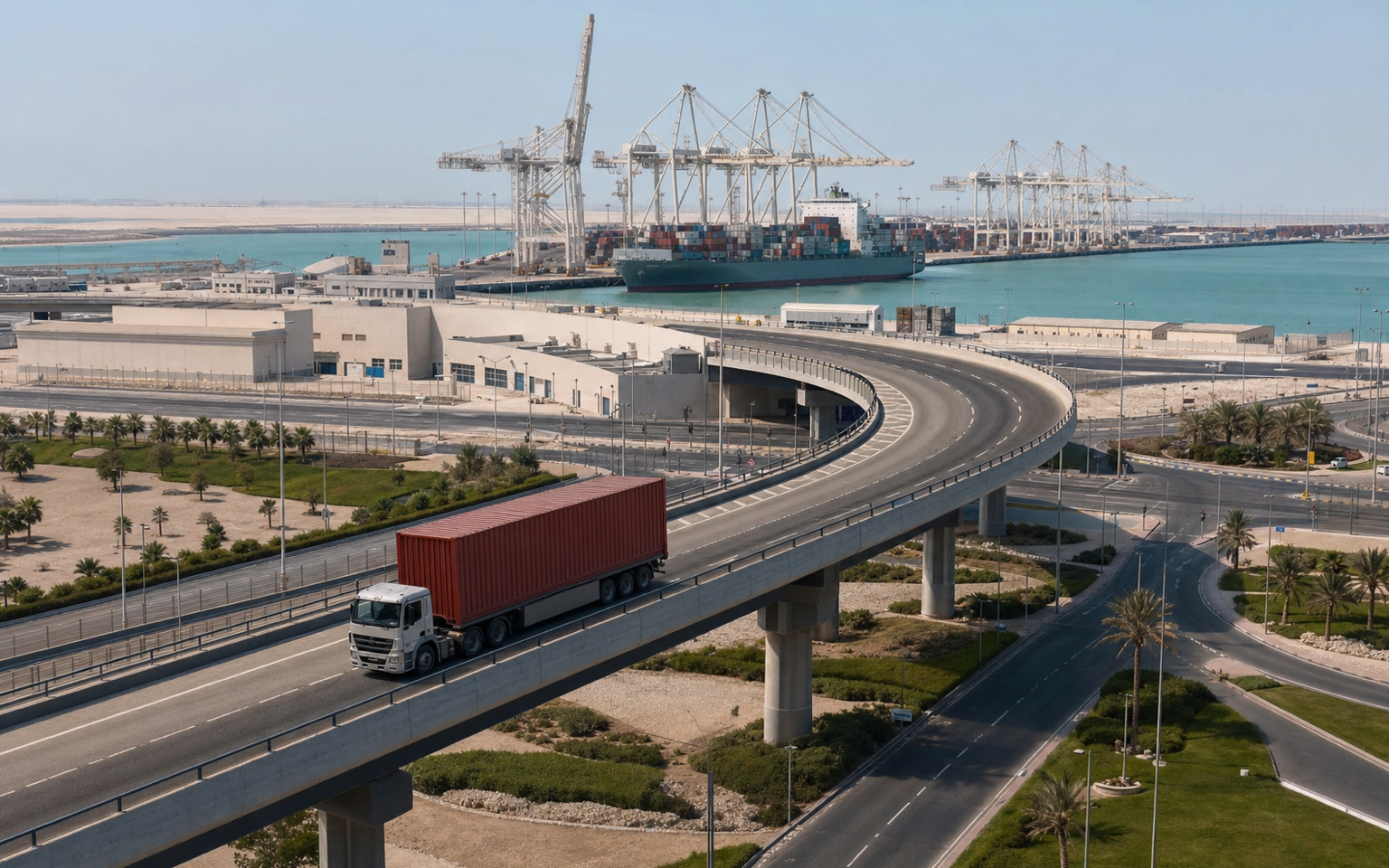
At Seatrade Maritime Qatar on 4 February 2025, Qatar's Ministry of Transport highlighted Hamad Port's move to 11th place in the World Bank and S&P Global Market Intelligence's 2023 Container Port Performance Index, from 38th in 2020. The ranking supports confidence in vessel-side efficiency, but cargo owners should still evaluate service frequency, connection risk, equipment availability, customs readiness and Qatar delivery as a single route decision.
The announcement links infrastructure with a broader logistics ambition
Qatar's Ministry of Transport used the opening of Seatrade Maritime Qatar 2025 to set out a broad maritime position. It pointed to investment in commercial ports and supporting logistics, described a national logistics services strategy and cited Hamad Port's climb in the 2023 Container Port Performance Index. The event statement also connected sustainability, technology and international partnerships. Taken together, this is not merely a claim about quay cranes. It is a policy view that ports, logistics services and trade relationships should contribute to economic diversification. For an importer or exporter, the practical value will be visible when that infrastructure supports clearer route choices, reliable handoffs and competitive total cost. National ambition creates the platform; shipment execution determines whether a customer can use it.
Read the port ranking for what it actually measures
The World Bank says the CPPI compares 405 container ports with a focus on how long container vessels spend in port. Its 2023 edition used a large dataset of vessel calls and container moves. That makes it a useful view of vessel-side performance and a prompt for port improvement. It is not a universal league table for customs speed, inland cost, service coverage or every shipper experience. The Ministry's cited rise to 11th therefore deserves attention without being stretched beyond its design. A cargo owner can combine the index with carrier schedules, cut-offs, routing, transshipment count, local free time and delivery requirements. Used that way, the ranking becomes one reliable input rather than a substitute for a shipment-specific plan.
Usable connectivity is more than the number of lines on a map
A port can connect to many markets while a particular shipment still faces an awkward movement. The origin factory may sit far from the advertised gateway. The sailing may depend on a connection whose timing is fragile. A reefer may need plug capacity at several points, while oversized cargo may not fit the nominal container service. For Qatar-bound freight, test the actual origin, cargo-ready date, equipment type, cut-off, planned port sequence, estimated arrival and inland delivery. Ask what happens if the first sailing is missed or a connection rolls. The answer should identify the next workable option, not just a general promise of global coverage. This is how regional hub language becomes a route a business can confidently purchase.
Re-export potential depends on control between movements
The Ministry described Hamad Port as a pivotal regional port for re-exportation. Re-export is not simply an import followed by another booking. The cargo may require an appropriate customs status, storage, inspection, relabelling or consolidation before the onward move. Ownership and commercial documents must remain consistent, and the next booking needs enough time to absorb the intermediate work. Container equipment terms also matter: a carrier box, a leased unit and cargo transferred between boxes create different responsibilities. Businesses considering Qatar as a regional distribution point should map the legal, physical and data handoffs before comparing headline transit times. The port can provide the gateway, but the operating model must explain how cargo remains controlled while it is between the inbound and outbound legs.
Sustainable infrastructure needs shipment-level choices
The 2025 Ministry statement highlighted ecofriendly technologies and framed smart, greener ports as an industry priority. Cargo owners can support that direction with practical decisions: accurate weights that improve planning, fuller container utilization where cargo compatibility allows, fewer failed truck trips, realistic delivery appointments and less unnecessary repositioning. They can also ask carriers and providers to state the basis of any lower-emission service claim. A port's efficient equipment does not automatically make every supply chain low carbon; the ocean route, vessel, fuel, inland mode and extra distance still matter. The useful approach is to collect activity data and improve the movement without pretending that one facility feature settles the entire emissions question.
The operator agenda is clarity, evidence and repeatability
Qatar's maritime platform is most valuable when businesses can repeat a successful movement. Build a route file that records the nominated service, actual milestones, document corrections, clearance sequence, truck and site performance, container condition, empty return and final cost. Review variations after each shipment. If an alternative service is proposed, compare it against the same scope rather than a different bundle of charges and assumptions. Where a national statistic or provider claim is used, label its period and source. This avoids turning a strong infrastructure story into unsupported marketing. Hamad Port's reported CPPI progress is a credible reason to examine Qatar's logistics proposition more closely. The commercial case is completed by the quieter evidence of on-time releases, controlled delivery and fewer surprises for the cargo owner.
Translate port strength into a route decision
- Confirm the precise origin gateway and Qatar arrival service
- Check direct versus transshipment routing and connection exposure
- Verify equipment availability at origin for the required date
- Prepare customs and commodity documents before departure
- Model Hamad Port release, trucking, unloading and empty return
- Keep port-efficiency statistics separate from door-to-door performance