The short answer
Oversized cargo planning should begin with verified drawings, weight and centre of gravity, then connect lifting, equipment, securing, route limits and every transfer point in one movement plan.
Measure the transport condition
Use final transport dimensions, not nominal machine dimensions. Include packaging, cradles, protrusions, lifting points and removable parts. Record gross weight, centre of gravity and load-bearing areas. Photographs help, but dimensioned drawings are the working document. If the cargo changes during fabrication, introduce a final verification gate before transport equipment is dispatched. A small change can affect crane capacity, lashing geometry, road clearance or vessel stowage.
Choose equipment around handling and stowage
Flatracks provide end frames and a container-compatible base for many over-width or over-height loads. Open tops help when crane loading is needed but side walls remain useful. Roll trailers suit heavy Ro/Ro movements. Breakbulk may be appropriate when container platforms cannot accommodate the load. Equipment availability, payload, concentrated load limits and securing points must be confirmed for the actual unit. A product category alone is not an engineering approval.
Survey the weakest part of the route
A movement is constrained by its tightest gate, lowest bridge, weakest surface or least capable crane. Review factory exit, public roads, port gates, terminal paths, vessel interface and destination access. Permit and escort requirements depend on jurisdiction and dimensions. The route survey should reflect the transport configuration, including trailer height and turning envelope. Avoid assuming that a road used by heavy vehicles can accept the width, axle loading or manoeuvring needs of this cargo.
Engineer the handoffs
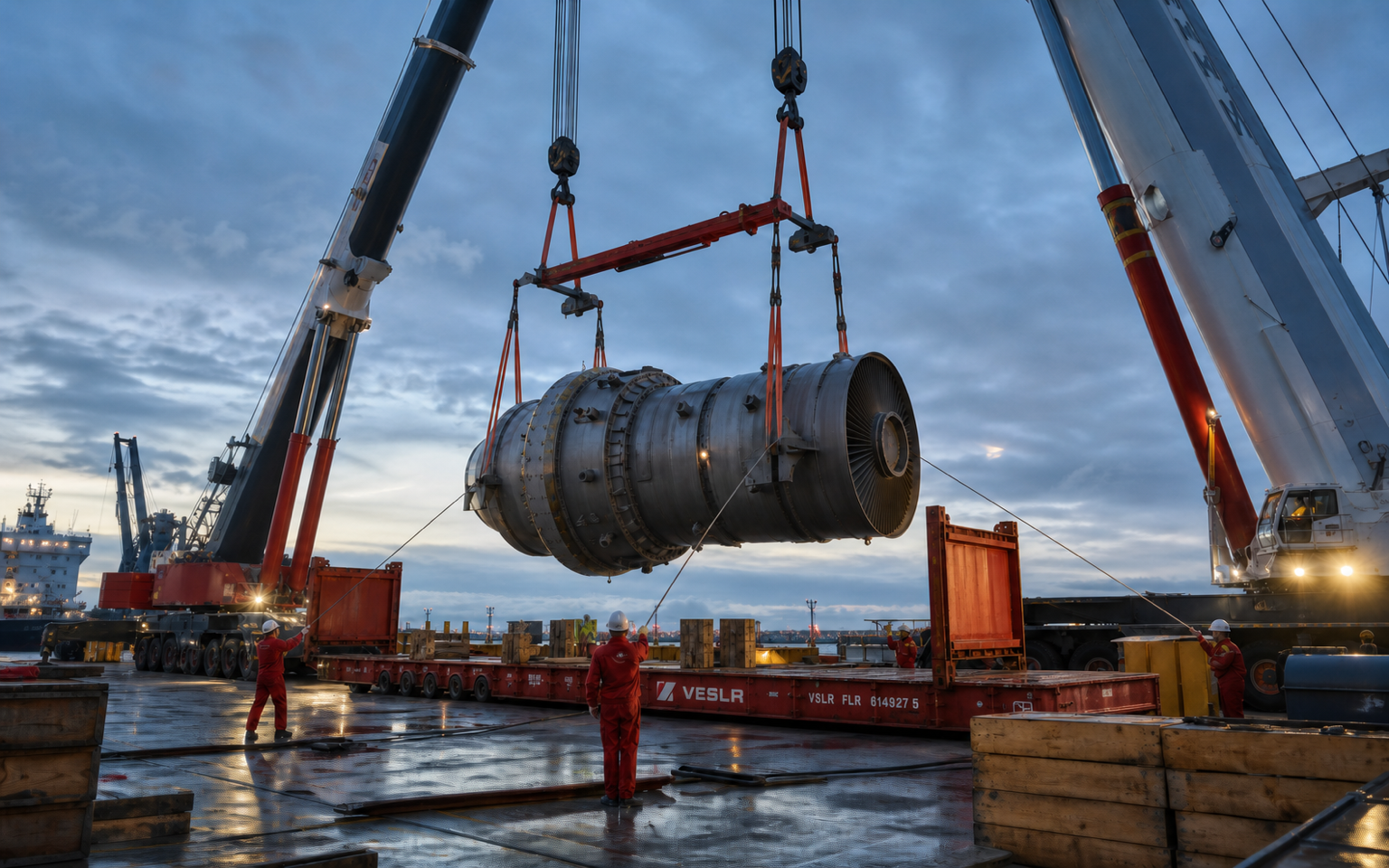
Each lift or transfer creates a new risk. Define crane capacity, rigging arrangement, lifting points, exclusion zones, weather limits and communication responsibility. Confirm who supplies spreader beams, shackles, mats and labour. The securing plan should account for the forces of the transport mode and be checked after early movement where appropriate. A coordinated method statement is more valuable than several disconnected vendor instructions.
Project cargo information pack
- Certified weight and transport dimensions
- Centre of gravity and lifting drawings
- Cargo photographs and handling restrictions
- Proposed equipment and load distribution
- Route survey and permit plan
- Lift, securing and handoff responsibilities


