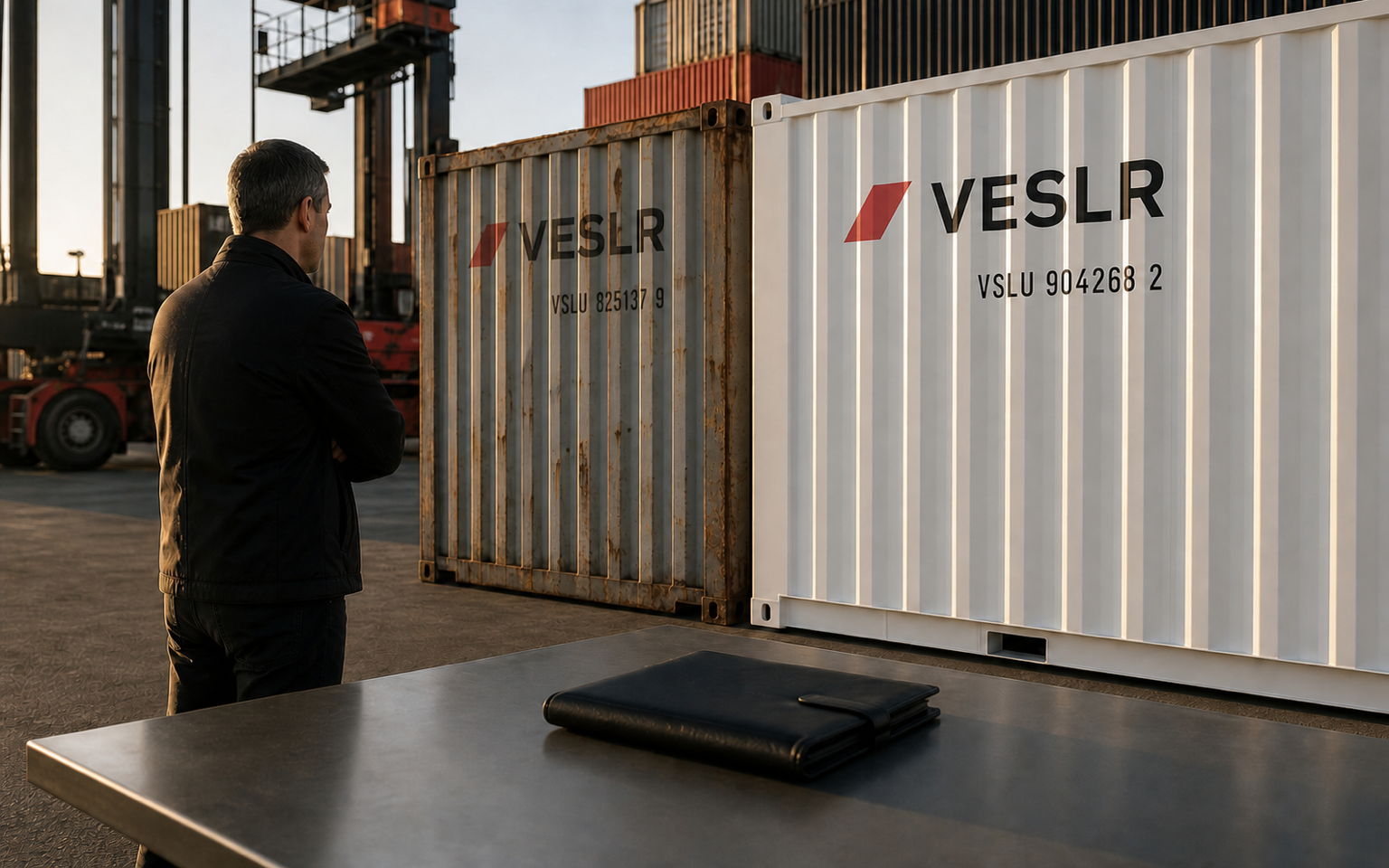
The short answer
Lease when the requirement is temporary, variable or location-specific. Consider buying when utilization is long, predictable and supported by a maintenance, storage and disposal plan.
Duration is the first filter
A project lasting weeks or a seasonal peak rarely needs permanent ownership. Leasing can align the cost with the period of use and may simplify disposal at the end. A container required for years at a stable site deserves a purchase comparison. Do not use the quoted daily lease rate alone. Model the full expected period, minimum charges, positioning, handling and redelivery. For buying, add inspection, delivery, maintenance, storage and eventual resale or disposal.
Utilization separates an asset from idle steel
Ownership is most compelling when the container performs useful work consistently. If demand changes by lane or equipment type, a purchased unit may sit in the wrong place. Leasing can move some location and residual-value risk away from the user, although redelivery restrictions still matter. Map expected use by month and location. A high annual average can hide long idle periods that create storage, repositioning and cash costs.
Ownership offers control—and responsibility
A purchased container can be modified, branded or dedicated to a controlled operation, subject to certification and transport requirements. The owner also carries condition, repair, inspection and disposal decisions. A leased unit normally has tighter modification and maintenance rules. Read those rules before planning liners, racks, paint or permanent fittings. Operational control has value, but only when the organization can manage the obligations that come with it.
Plan the exit on day one
A lease ends with redelivery; ownership ends with reuse, resale or disposal. Both require a location and condition plan. Ask where a leased unit may be returned and what condition is acceptable. For a purchased unit, consider whether a secondary market exists near its final location and whether transport cost erodes residual value. The better option is the one that still makes sense when the original project or trade lane changes.
Compare the options on one page
- Expected period and monthly utilization
- Collection, delivery and repositioning
- Maintenance and inspection responsibility
- Modification or branding needs
- Storage during idle periods
- Redelivery, resale or disposal route


