The short answer
ISO tanks move compatible bulk liquids in a reusable intermodal frame. Selection depends on product classification, tank type, capacity, pressure, temperature, fittings, cleaning history and regulatory approval.
An intermodal pressure vessel
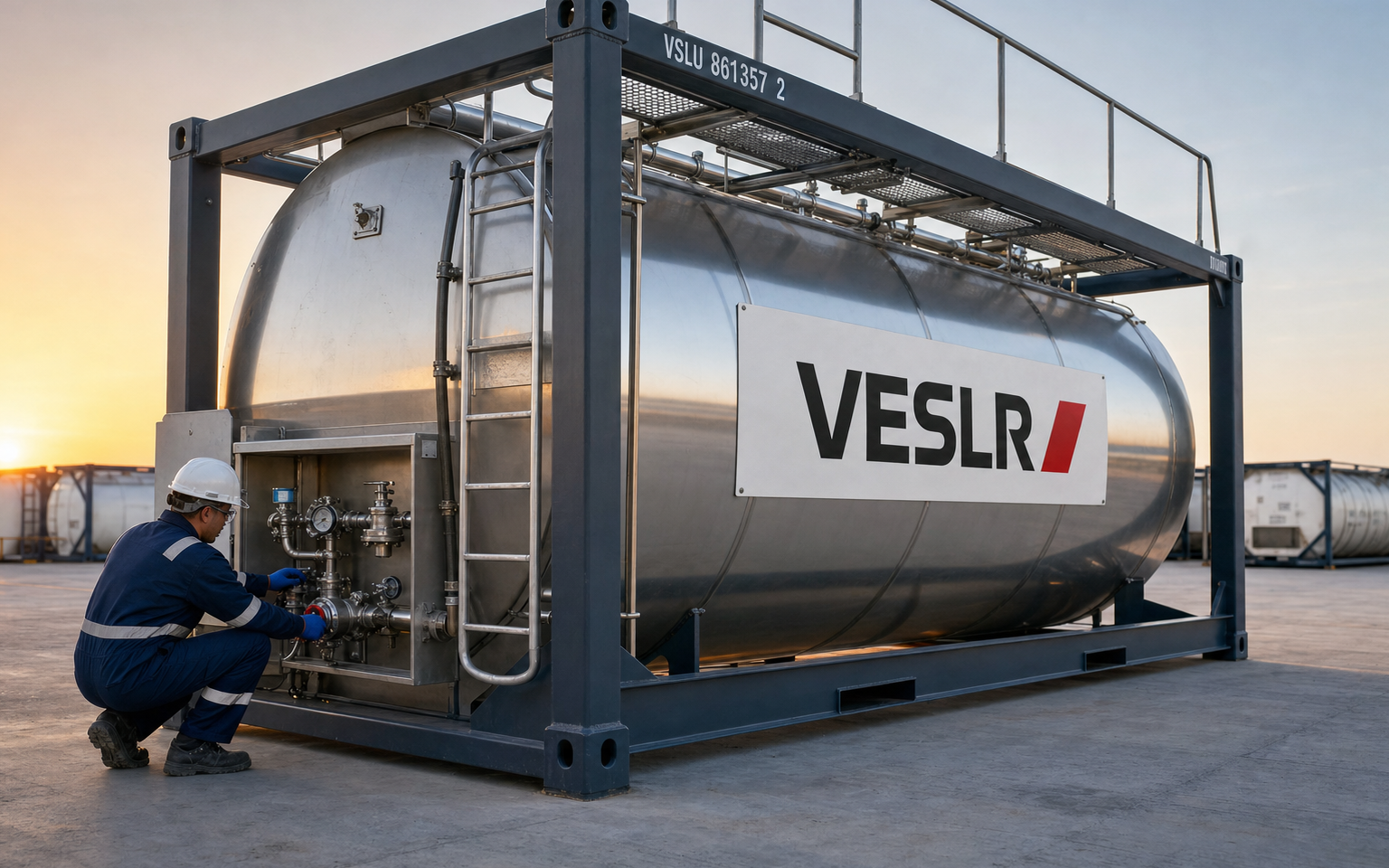
An ISO tank places a cylindrical stainless-steel vessel inside a standard frame so it can move by road, rail and sea. Designs vary by tank instruction, working pressure, insulation, heating capability, baffles, lining and fittings. Capacity alone is not enough to specify a unit. The product’s transport classification, density, vapor pressure, corrosion behavior and temperature range must be reviewed by qualified parties.
Product compatibility governs selection
Confirm the exact product, concentration, safety data and previous cargo restrictions. Valves, seals, gaskets and tank material must be compatible. Food-grade and chemical service need controlled cleaning histories and allocation practices. Hazardous products bring additional documentation, marking, inspection and handling requirements. Do not substitute a similar product name for a technical review.
Filling level affects safety
Minimum and maximum filling rules can apply to control surge and allow thermal expansion. Product density determines payload at a given volume, while road and container gross limits still apply. Loading temperature, heating needs and discharge method influence the operating plan. Verify weighbridge, hose, pump, earthing and spill-control arrangements at both ends.
Cleaning, inspection and records follow the tank
Tank containers require periodic testing and maintenance. Before loading, review validity, cleanliness, previous cargo where required, valve condition and release documents. After discharge, residual product and cleaning responsibility should be clear. A tank waiting for an approved wash or repair can create substantial delay, so plan the post-discharge facility before the movement begins.
Tank-container specification inputs
- Product name, classification and SDS
- Density, loading temperature and quantity
- Required tank instruction and pressure
- Fitting, hose and discharge method
- Cleaning and previous-cargo requirements
- Testing validity and post-discharge plan


