The short answer
Qatar's Ministry of Transport said its Hamad Port competitiveness study identified cost and procedural barriers and set out 24 initiatives across efficiency, licensing, private-sector participation, infrastructure, investment and commercial communication. For cargo owners, the important signal is that the next gains should be measured across the entire port-to-door journey, including document readiness, release, trucking, depot work and final delivery.
The study widens the definition of port performance
On 21 February 2026, Qatar's Ministry of Transport reported the conclusion of a workshop on the competitive position of Hamad Port. The Ministry said the study examined procedural and cost-related obstacles to cargo growth and presented 24 initiatives. That emphasis matters because a terminal can work efficiently while the customer still experiences delay elsewhere. A container may be discharged on time but wait for a corrected document, a release, a truck slot, an inspection or a delivery site. VESLR reads the announcement as a useful shift from judging one facility to judging the connected system. The relevant customer question is not simply how fast a vessel is worked. It is how reliably cargo moves from confirmed arrival through lawful release to the agreed inland point, with the equipment obligation properly closed.
Cost should be read as a stack, not a single tariff
The Ministry explicitly included cost reduction among the study's recommendations, but an operator should resist turning that into a hunt for one cheaper line item. Total port-related cost can include terminal charges, carrier charges, customs support, examinations, trucking, waiting time, handling, depot activity and the commercial effect of a delayed delivery. Some costs are fixed by published terms; others arise only when information or capacity arrives late. A useful competitiveness programme therefore makes the stack easier to see and the exceptions easier to prevent. Importers can support that work now by asking for quotations with clear inclusions, exclusions, validity and event-driven charges. They should also record actual cost after delivery. Better national policy and better shipment discipline reinforce each other; neither can compensate fully for an opaque operating scope.
Procedural reform depends on cleaner shipment data
Streamlined procedures are valuable only when each party receives accurate information early enough to act. The Ministry's focus on operational efficiency and licensing should be matched by disciplined cargo data from the private side. Legal company names, commodity descriptions, package counts, weights, values, origin information and transport instructions need to agree across the commercial invoice, packing list, booking and customs file. The point is not paperwork for its own sake. Inconsistent data creates manual checks, amendments and uncertainty about who may release or receive the goods. For regular flows through Hamad Port, cargo owners should maintain a controlled shipment brief and master-data record instead of rebuilding the facts in email every time. That makes future digital or regulatory improvements easier to use because the input is already dependable.
Roads, zones and depots are part of the port product
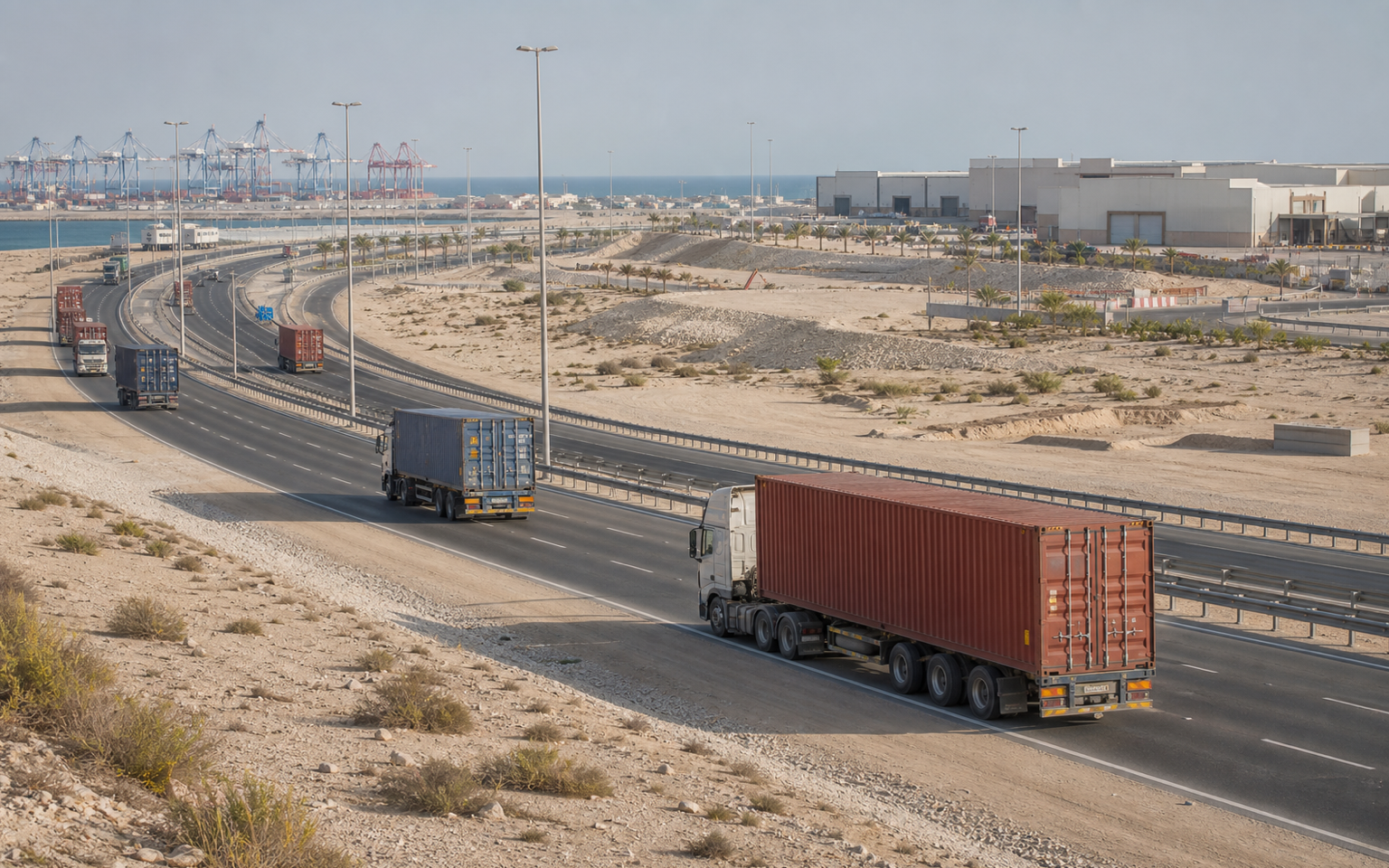
The Ministry described Hamad Port as the point where Qatar's roads, free zones, logistics zones and supply chains come together. Commercially, that means port capacity cannot be assessed without the inland network. A consignee needs a suitable truck, an available driver, the correct access permission, a delivery window and a site able to unload. A leased or carrier-owned container then needs a clear next move: retained under an agreed lease, repositioned, or returned to the nominated depot within the applicable terms. Peak demand can expose constraints well away from the berth. Forwarders and equipment providers should map those handoffs by owner and time, including alternatives for a missed slot. The same map can reveal where a small change in notification or scheduling would remove more delay than a much larger infrastructure intervention.
Private-sector participation must produce accountable execution
Empowering the private sector is one of the areas identified by the Ministry. The measure of success should be more than the number of providers. Each movement needs an accountable party for the next milestone and a clean escalation path when the plan changes. A forwarder should know what it controls, what the port or carrier controls, what the customs representative needs and what remains with the importer. A depot should receive an accurate unit number and condition record. A trucker should not discover the unloading constraint at the gate. Commercial communication, another theme in the announced initiatives, is where these responsibilities become usable. Service providers can compete on clarity as well as price: a defined operating scope, realistic time assumptions, named exceptions and prompt evidence when a milestone is completed.
Build a customer-level scorecard beside national indicators
National port studies and international rankings are useful reference points, but an importer needs a narrower scorecard. Track document-ready time, release-ready time, container availability, truck arrival, gate completion, delivery completion, empty return and final invoice. Record why a target was missed instead of assigning every delay to the port. Over several shipments, the pattern may show that late supplier documents, weekend arrivals, short delivery windows or equipment mismatches are the real constraint. The February 2026 Ministry announcement does not publish the detailed study findings, so businesses should not invent conclusions it has not released. They can, however, act on its stated direction: make cost, procedure, efficiency and communication measurable across the logistics chain, then use evidence to engage carriers, brokers, depots and authorities constructively.
A Hamad Port movement scorecard
- Record when complete, consistent import documents are first available
- Separate vessel arrival, cargo availability and customs release milestones
- Confirm trucking, site access and unloading before the delivery request
- Track free time and the nominated empty-container return location
- Reconcile estimated and actual port-to-door charges by cause
- Assign one owner and escalation contact to every handoff