The short answer
Use an open top when overhead loading and side protection help, a flatrack for over-width or over-height cargo needing a container platform, and a roll trailer for heavy Ro/Ro cargo moved by terminal tractor.
Open top: overhead access with container walls
Open tops keep side walls, end doors and a container floor while replacing the fixed roof with removable bows and a cover. They suit crane-loaded machinery, stone, timber and cargo that is too tall for the door. Over-height cargo needs carrier approval and special stowage. The cover is weather-resistant, not a substitute for product packaging. Plan how roof bows, tarpaulin and securing will be fitted around protrusions.
Flatrack: access from the side and above
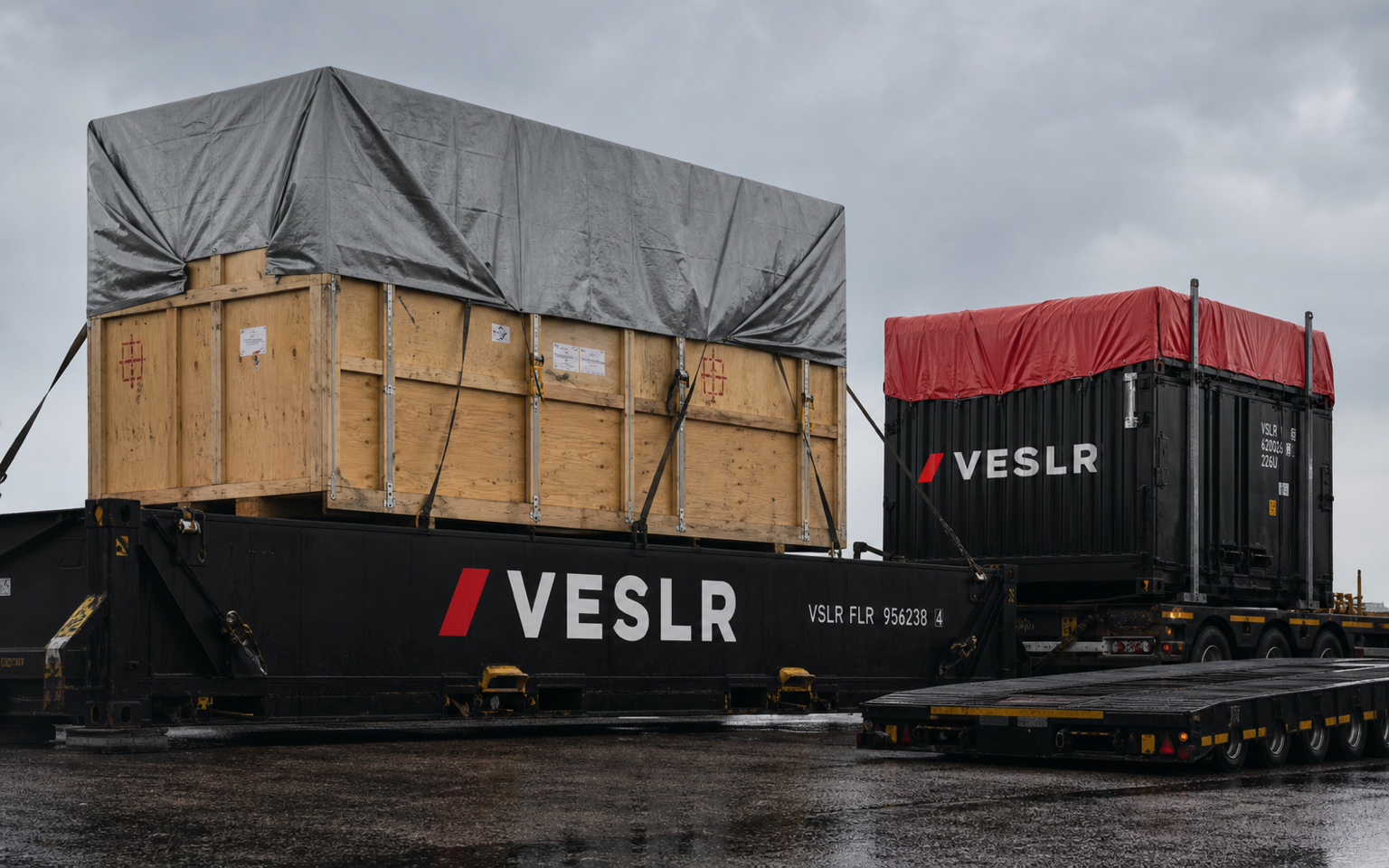
Flatracks provide a strong base, corner castings and end frames without full side walls. They suit over-width machinery, vehicles, steel and industrial components. Payload and concentrated-load limits must be checked for the specific design. Cargo often needs engineered blocking, bracing and lashings because there are no walls to contain movement. Folding end frames can support efficient empty repositioning but do not change loaded transport requirements.
Roll trailer: heavy cargo in Ro/Ro systems
Roll trailers are low platforms moved by terminal tractors and designed for Ro/Ro vessel operations. They can carry heavy or long cargo that benefits from rolling on and off rather than being lifted at each vessel interface. They are not standard road trailers and normally need compatible terminal and vessel systems. Cargo must be secured for sea movement, and the destination needs a plan to transfer it from the roll trailer.
Select around the entire handling chain
Start with weight, transport dimensions, centre of gravity, lifting points and securing points. Then confirm origin loading, inland movement, terminal handling, vessel type, stowage and destination unloading. Equipment that works at origin can fail at destination if a crane, tractor or transfer platform is unavailable. Ask for engineering review when load distribution or lashing is not routine.
Specialist equipment comparison
- Transport dimensions and gross weight
- Centre of gravity and load footprint
- Origin and destination lifting method
- Over-width and over-height amount
- Vessel and terminal handling system
- Blocking, bracing and lashing design


