The short answer
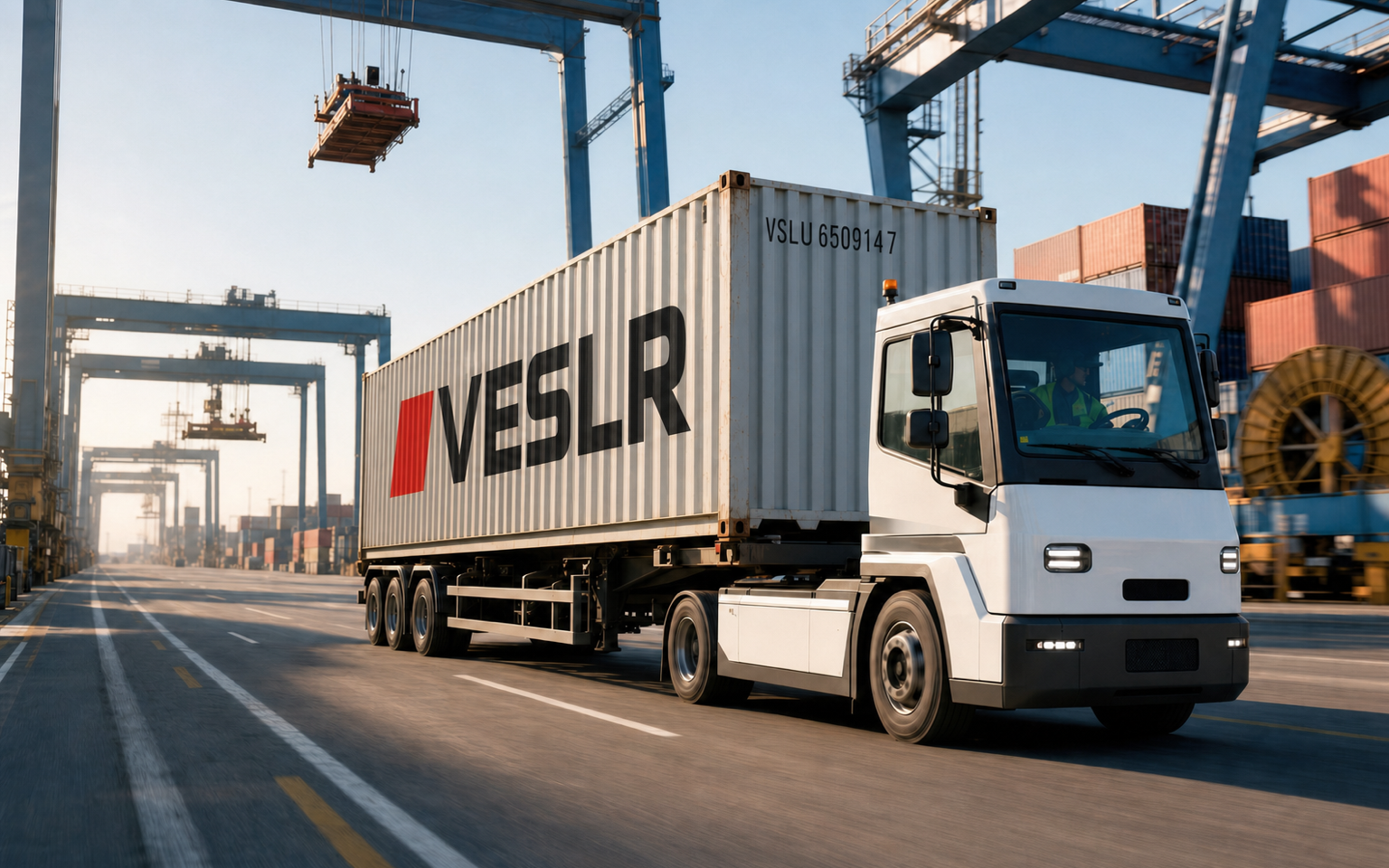
DP World announced on 19 March 2025 that the first wave of an electric freight system was operating around the clock on inter-terminal container moves at Jebel Ali. The company said the initial fleet was intended to move more than 204,000 twenty-foot containers annually and estimated an annual reduction of 14,600 tonnes of carbon-dioxide equivalent versus diesel operations. The transferable lesson is to electrify a measurable duty cycle with charging and dispatch designed around it.
A defined duty cycle makes the technology testable
The deployment focuses on inter-terminal container flows inside a large port environment. That gives the operator repeated routes, known loads, controlled facilities and a dispatch system able to observe vehicle use. These conditions are different from an unrestricted long-haul network, where charging access, range and driver schedules vary widely. Starting with a bounded job allows the operator to size batteries and chargers against actual shifts and measure whether electric vehicles can deliver the required moves. Other ports should copy the logic, not the headline. Identify a high-frequency movement with stable origin and destination, then collect distance, load, idle time, queue time and energy data before selecting the fleet.
The system includes more than the trucks
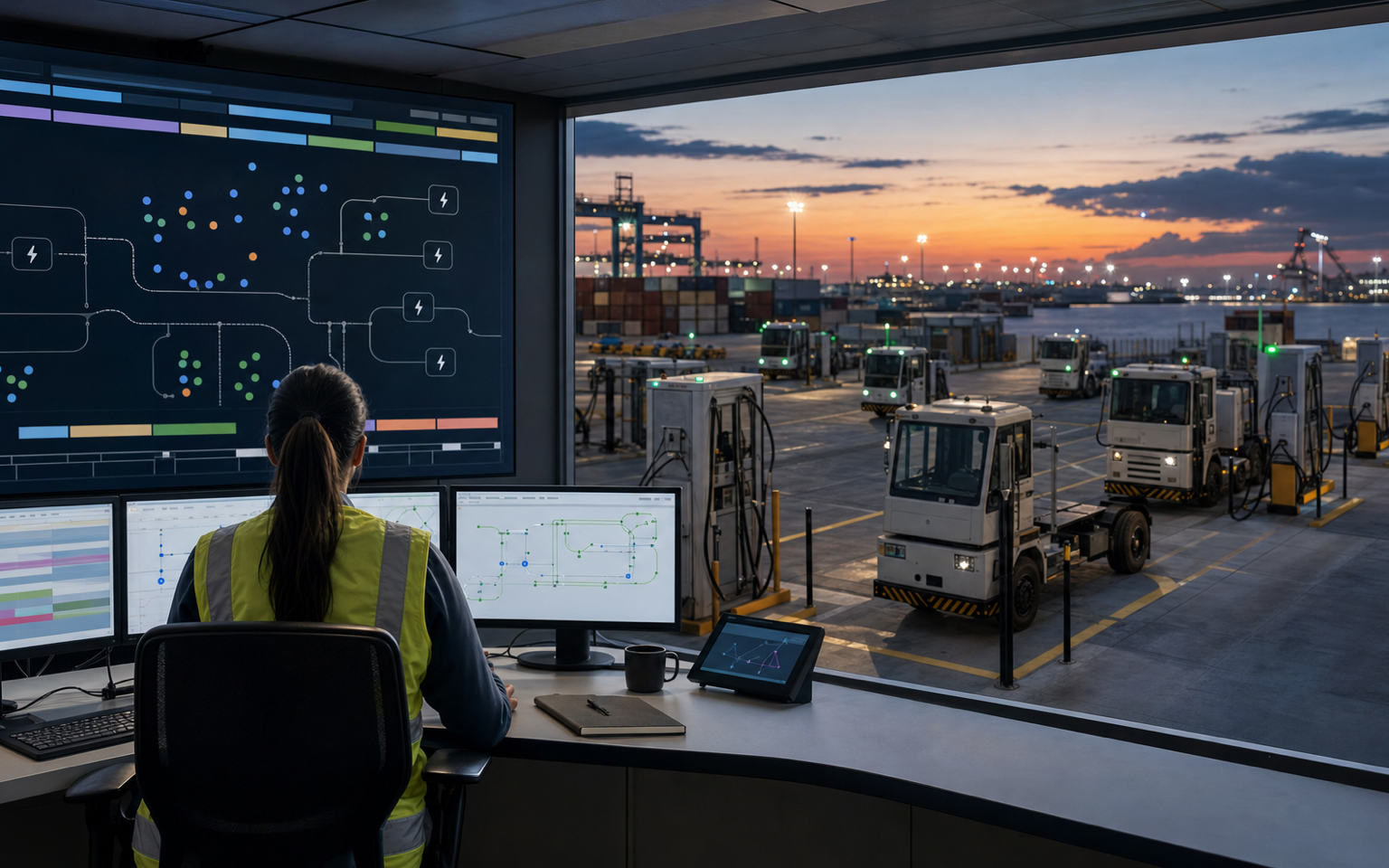
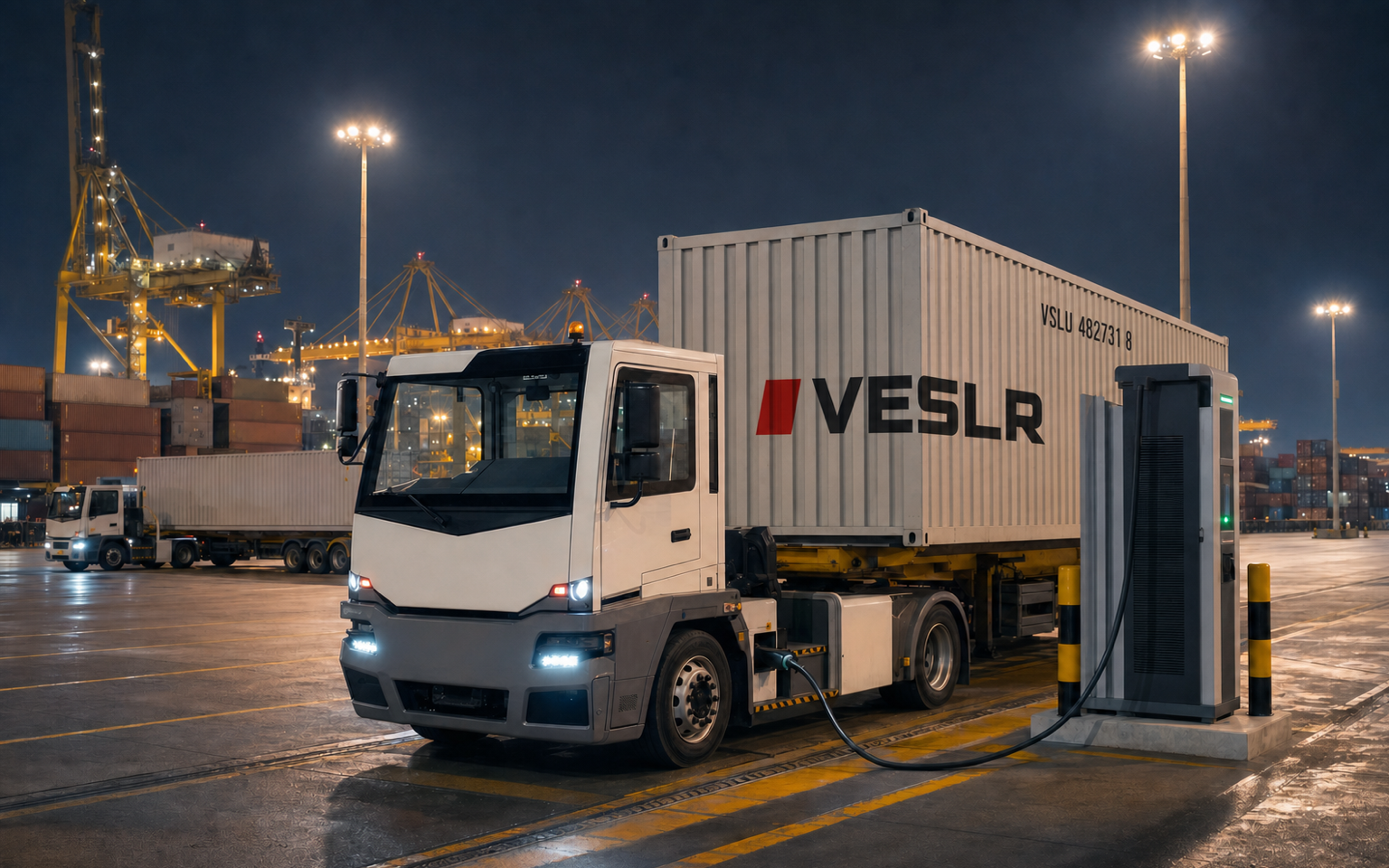
DP World described an integrated platform combining electric vehicles, charging infrastructure and an AI-driven operating system supplied by Einride. Each element protects the others. A capable vehicle waits if the charger is unavailable. A large charger adds little value if it creates a peak the electrical connection cannot support. Software can sequence charging and work, but only with accurate asset and job data. Maintenance staff and emergency procedures must be prepared for the new equipment. A procurement comparison should therefore include power upgrades, charger redundancy, software integration, spare vehicles, training, service support and battery performance over the expected life. The vehicle purchase price is only one line in the operating case.
The carbon claim needs a declared boundary
The company estimated that the initiative would avoid 14,600 tonnes of carbon-dioxide equivalent each year compared with diesel operation. Because this is DP World's forward estimate, it should be attributed as such rather than restated as an independently verified result. Evaluating the outcome requires the baseline diesel fuel use, electricity consumption, grid or contracted power emissions, vehicle availability and actual work performed. A useful metric is emissions per comparable container move, accompanied by total annual emissions. That prevents a reduction caused by lower activity from looking like an efficiency gain. Ports adopting electric freight should publish methods and later reconcile forecasts with operating data.
Round-the-clock operation changes charging strategy
A fleet that works continuously cannot assume every vehicle charges overnight. Charging windows must be built into dispatch, perhaps during natural pauses or through rotation between working and charging units. Queueing at a charger becomes an operational constraint similar to queueing at a crane or gate. Hot Gulf conditions can also affect energy use and equipment cooling, so local performance data matters. The correct design holds enough reserve to manage a delayed job, charger fault or demand peak without reverting unpredictably to diesel. It also coordinates charging with site power limits. The Jebel Ali announcement is notable because it describes live 24-hour use, but long-term availability and productivity should be judged through completed moves and service records.
Scaling from a first wave should be gated by evidence
DP World said later phases were planned, with the full fleet in 2026 described as capable of moving two million twenty-foot containers annually. A scale target creates direction; each phase should still earn the next investment. Track move completion, energy per move, charger use, downtime, maintenance, safety events and cost against the diesel baseline. Test the fleet in peak heat and workload. If the first route performs well, expand to the next similar duty cycle before jumping to a very different one. Staged deployment protects service continuity and exposes infrastructure needs early. It also makes the emissions forecast more credible because assumptions are replaced progressively with observed data.
The Gulf opportunity is operational repeatability
Large Gulf ports and logistics zones contain many repetitive container moves between berth, yard, inspection, warehouse and depot. That can suit electrification where power, land and operating control are available. The business case will differ by port, electricity source, climate, labour model and journey length. Qatar operators should begin with their own movement data rather than importing Jebel Ali's savings estimate. Cargo owners can support adoption by accepting scheduled windows, reducing failed collections and sharing accurate container status. Those behaviors make vehicle work more predictable regardless of powertrain. Electric port trucking is most effective when it is part of a cleaner flow, not an electric vehicle sent into the same avoidable queues.
Evaluate an electric port-transport use case
- Choose a bounded, repetitive route and measure its real duty cycle
- Size vehicles, chargers and site power as one capacity plan
- Include software, maintenance, training and redundancy in total cost
- Define the diesel baseline and electricity-emissions method
- Gate each rollout phase on moves, uptime, safety, energy and cost
- Remove failed trips and idle time alongside the powertrain change