The short answer
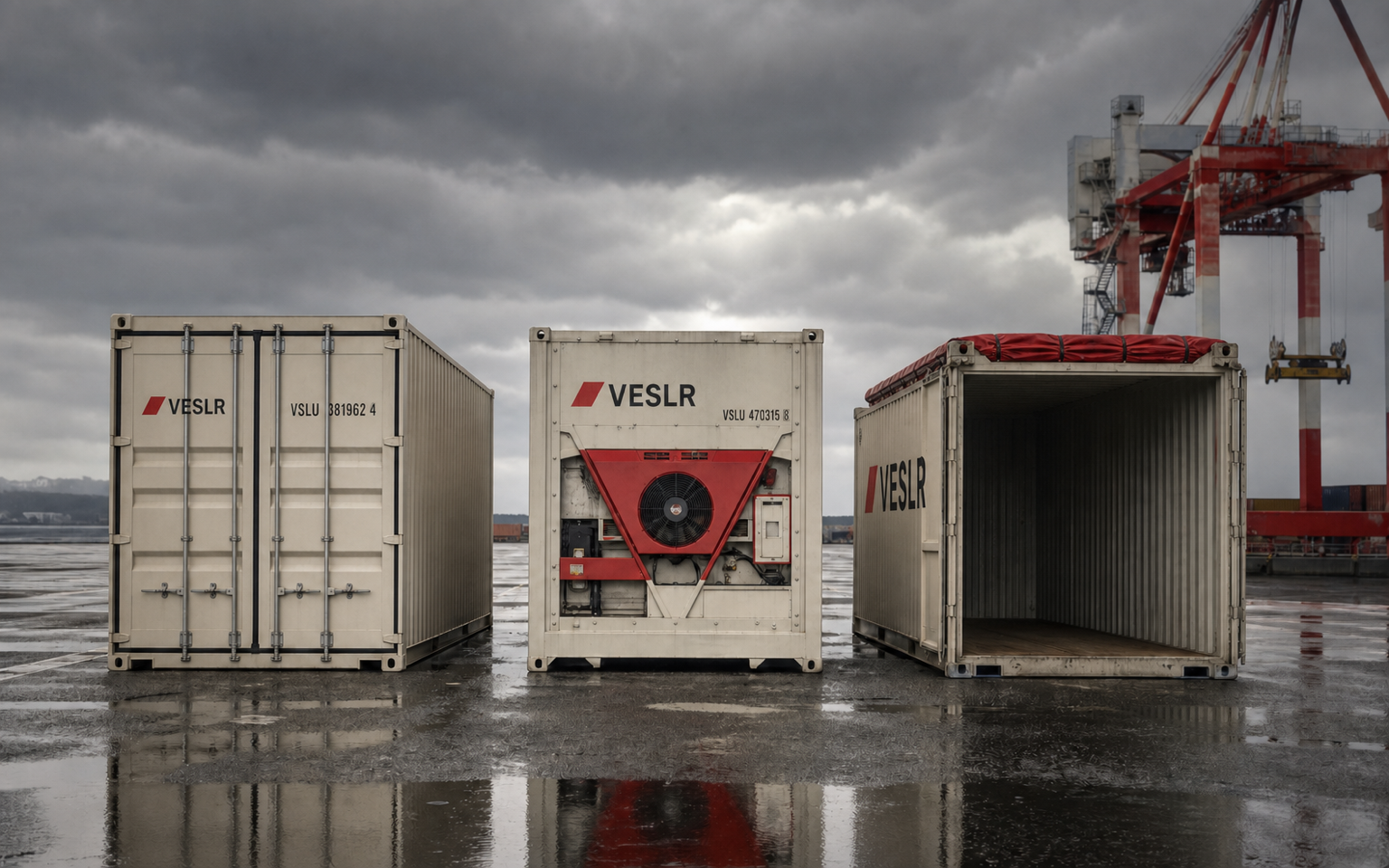
Use a dry container for protected general cargo, a reefer when temperature control is part of product integrity, and an open top when the cargo must be loaded from above or extends beyond standard door height.
Dry containers: the general-purpose workhorse
Dry containers suit packaged goods, manufactured products, textiles, furniture and many other commodities that need a secure weather-resistant enclosure. The key choice is often size rather than type. A 20ft unit handles dense cargo well; a 40ft or 40ft high cube offers more volume for lighter goods. Check door opening dimensions as carefully as internal volume. Cargo that theoretically fits inside may still be impossible to load through the doors or safely secure after loading.
Reefers: temperature is an operating system
A refrigerated container does more than make a box cold. It maintains a specified environment when airflow, packing pattern, pre-cooling, power and monitoring are all correct. The machine cannot quickly remove field heat from warm product, and blocked floor channels can undermine circulation. Define the commodity, set point, acceptable variation, ventilation setting and journey duration. Confirm power at the stuffing point, terminal, vessel and destination, plus the response process if an alarm is raised.
Open tops: access from above
Open-top containers are designed for cargo that needs crane loading or cannot pass through standard doors. Machinery, stone, timber and tall components are common candidates. Removable roof bows and a weather-resistant cover provide flexibility, but out-of-gauge height changes the transport and stowage plan. Measure the cargo at its widest and highest secured point, include lifting frames and packaging, and confirm how the tarpaulin will be fitted without contacting vulnerable surfaces.
Choose around the complete movement
Container selection affects trucking, terminal handling, vessel planning, securing and unloading. A specialist box can solve one constraint while introducing another. An open top may need special stowage; a reefer needs continuous power; a longer unit needs suitable road access. Compare equipment only after the full route and handling method are visible. When the cargo is borderline, provide drawings and photographs rather than relying on a short commodity description.
The equipment decision in six questions
- Does the cargo require temperature control?
- Can it pass through standard container doors?
- Will it be loaded by forklift, crane or pump?
- Is it over-width, over-height or unusually heavy?
- What power, cover or securing systems are required?
- Can every handoff handle the selected equipment?


