The short answer
UNCTAD's Review of Maritime Transport 2024, published on 22 October, found that disruptions affecting major maritime chokepoints lengthened routes and contributed to higher, more volatile freight costs. For container shippers, a diversion should trigger a linked review of schedule, fuel-related charges, insurance, inventory, box utilization and destination free time. Treat the new route as a changed operating model, not just extra days on the water.
A route diversion produces a chain reaction
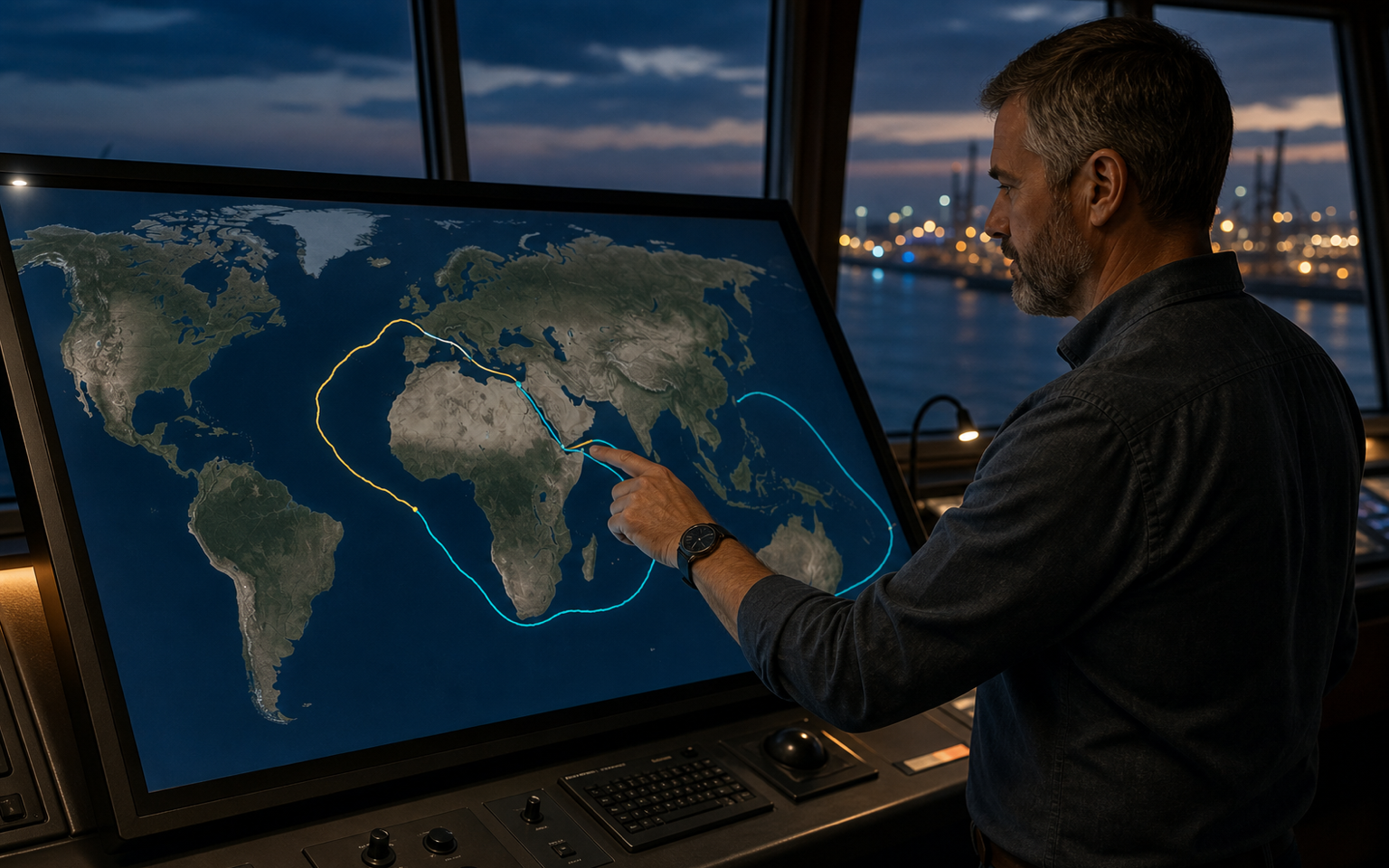
UNCTAD reported that disruptions affecting the Suez, Red Sea and Panama routes increased sailing distances and placed pressure on supply chains during late 2023 and 2024. A longer voyage consumes more vessel time and fuel. It can require additional ships to preserve a weekly service, keep containers away from their next load for longer and shift arrival patterns at ports used for bunkering or connections. Insurance and operating costs may also change. Those effects do not appear identically in every quote, but they explain why a route announcement matters before a new tariff is published. When a carrier changes the port sequence, re-open the shipment plan and the cost model together. The commercial and operational consequences are parts of the same event.
Rebuild the quote around the new route
Do not compare a diverted service with the old service using only the ocean line. Ask for the current port sequence, estimated transit range, transshipment points, rate validity and surcharges. Confirm which local charges remain estimates and whether free time starts from discharge, availability or another contractual event. A longer, less predictable voyage can change the timing of payments and customs preparation even when destination charges are unchanged. If the quote includes a temporary surcharge, record its trigger and review mechanism where available. A transparent scope will not make the market stable, but it prevents a buyer from confusing a low base rate with a low total landed movement. Reconcile the final invoice after delivery so the next scenario begins with evidence.
Vessel and equipment capacity become tied up for longer
When a round voyage takes longer, the same ship cannot complete as many cycles in a year. The same physical container also spends more time loaded, at sea and waiting through changed handoffs. This can tighten effective capacity even if no cargo demand is added. The effect is uneven: an import-heavy location may accumulate boxes while an export origin lacks the required type. Standard dry equipment may recover faster than reefers or special units because the latter have smaller fleets and stricter technical needs. Book location-specific equipment early and ask for a credible substitute. If using leased containers, review whether the new route still fits the lease period and redelivery point. An extra sailing week can become extra hire, storage or repositioning exposure.
Lead-time variability matters more than the average extension
A route may be described as adding a certain number of days, but the business impact comes from the range. Vessel bunching, altered connections and port windows can make arrivals less predictable. Calculate the replenishment buffer from observed variation and the consequence of stockout, not from one advertised transit. Separate critical inputs from ordinary inventory. It may be sensible to move a small urgent portion by a faster mode while the base quantity stays on ocean freight. For seasonal goods, bring the decision date forward so a missed cut-off does not erase the selling window. The aim is not to carry maximum stock. It is to keep transport uncertainty from becoming an unplanned production or customer failure.
A safer or workable route can still carry an emissions trade-off
UNCTAD linked longer sailing distances with more fuel consumption and emissions. Cargo owners should not ignore that effect or pretend they control a carrier's navigational decision. They can request route and activity data, improve container utilization, reduce avoidable repositioning and compare lower-emission service options on a clear methodology. They should also avoid making absolute green claims from a single feature. A newer vessel or alternative fuel may reduce part of the footprint while a substantially longer route adds activity. Report the boundary and assumptions. Operational resilience and decarbonization can pull in different directions during disruption; honest measurement is the starting point for managing the trade-off.
Use a small control tower, not a stream of alerts
For each critical shipment, maintain one record with the latest vessel, route, estimated arrival, connection, document status, inventory impact and next decision. Assign an owner and an escalation threshold. A generic news alert should not automatically trigger a reroute; a confirmed carrier advisory or material change to the shipment should. Review the few milestones that matter and share one agreed update with the supplier, forwarder, consignee and finance team. After delivery, record actual transit, charges and exceptions. UNCTAD's review shows that chokepoint shocks can transmit through costs and the wider economy. At company level, the antidote is a controlled information path that turns a market event into timely, proportionate action.
When a carrier changes the route
- Obtain the revised port sequence and transit range in writing
- Recheck quote validity, surcharges, insurance and payment timing
- Extend equipment lease or redelivery planning where needed
- Recalculate stockout exposure using lead-time variation
- Update customs, warehouse, trucking and customer milestones
- Measure the final cost and actual transit for the next decision