The short answer
Most first ocean imports need a consistent commercial invoice, packing list and transport document, plus customs declarations handled in the relevant countries. Certificates of origin, conformity, test reports, permits or other documents depend on the product and destination. Ask the destination customs professional for a shipment-specific list before production finishes.
Build a document map before asking for documents
The exact file depends on what you are buying, where it was made, how it moves and where it will be imported. Start with four columns: document, preparer, reviewer and deadline. Your China supplier usually prepares commercial product information; the forwarder or carrier handles transport records; customs professionals support declarations; inspection bodies, chambers, laboratories or authorities may issue specific evidence. Assign the buyer to review the commercial facts across the set. Confirm current destination requirements using official sources and a qualified customs adviser. A supplier saying ‘we export this all the time’ is not enough, because their previous buyer may have used a different country, product model or import regime. Ask for draft documents while changes are still possible. The important idea is simple: paperwork is not an administrative packet created after shipping. It is part of the operating plan and should be ready in sequence with production, inspection, booking and payment.
The commercial invoice explains the transaction
A commercial invoice generally identifies the genuine seller and buyer, invoice number and date, product descriptions, quantities, unit and total values, currency, agreed Incoterm and named place, country information and other details required by the parties or destination. Descriptions should be specific enough to match the purchase and support classification without becoming marketing copy. Model numbers, material or function can help distinguish products. The value should reflect the lawful transaction; do not ask a supplier to understate it or mark a commercial order as a gift. Check names and addresses against registration and import records. Reconcile quantity and value with the purchase order, payment and packing list. If samples, tooling, assists, freight or discounts affect customs valuation, seek professional advice rather than guessing. The commercial invoice is not the same as a marketplace order screen or a domestic tax invoice, though those records may support the file. Ask the destination broker to review the draft format and required statements.
The packing list explains the physical shipment
The packing list should tell the handler and customs team how the goods are packed: package count and type, carton or pallet marks, contents, net and gross weights, dimensions and totals. It may show the container and seal after loading where appropriate. The totals should reconcile with the commercial invoice and the freight booking. If three product models share thirty cartons, make the distribution understandable. A vague line such as ‘accessories—10 boxes’ creates avoidable questions. Ask the supplier for final—not estimated—packing data when production and packing are complete. For multiple-supplier consolidation, preserve supplier-level lists and build a shipment summary that reconciles to the load. Packing-list accuracy affects freight charges, container planning, warehouse receiving, customs review and shortage claims. Photograph package marks and retain a loading record for higher-risk shipments. A good list lets a person who never visited the factory understand what should physically arrive.
The transport document records the carriage
Ocean shipments commonly use a bill of lading or sea waybill; air movements use an air waybill; courier and road movements have their own records. The format, negotiability and release process matter. Confirm shipper, consignee, notify party, cargo description, package count, weight, ports or places, freight terms and container details before the carrier’s documentation cut-off. Ask who receives the draft and who can approve it. Decide with your bank, insurer, forwarder and adviser whether an original, electronic release, sea waybill or other structure is suitable—especially if payment uses documentary controls. A bill of lading is not a certificate that product quality is correct, and its cargo description does not replace a detailed invoice. Late amendments can cost money and delay release. Treat transport instructions as a controlled summary built from approved commercial and packing information, not as a quick form completed from memory.
Product and origin evidence depends on the actual goods
A certificate of origin may be needed for customs, customer or trade-treatment purposes, and its issuer and format depend on the route and rules. Regulated products may require conformity evidence, test reports, health or phytosanitary documents, material declarations, safety data or import permits. Wood packaging may need to meet relevant treatment and marking requirements. Batteries, liquids and dangerous goods require accurate transport classification and carrier acceptance. Do not accept a certificate because the title sounds right. Check the issuing body, holder, model, standard, scope, date and current status, and confirm that it applies to the product being shipped. In Qatar, India and wider Middle East markets, use current official requirements for the specific HS code and use case. Compliance work should start before production, because a missing label, test or approved component may be impossible to repair through paperwork at the port.
Run one calm consistency review before departure
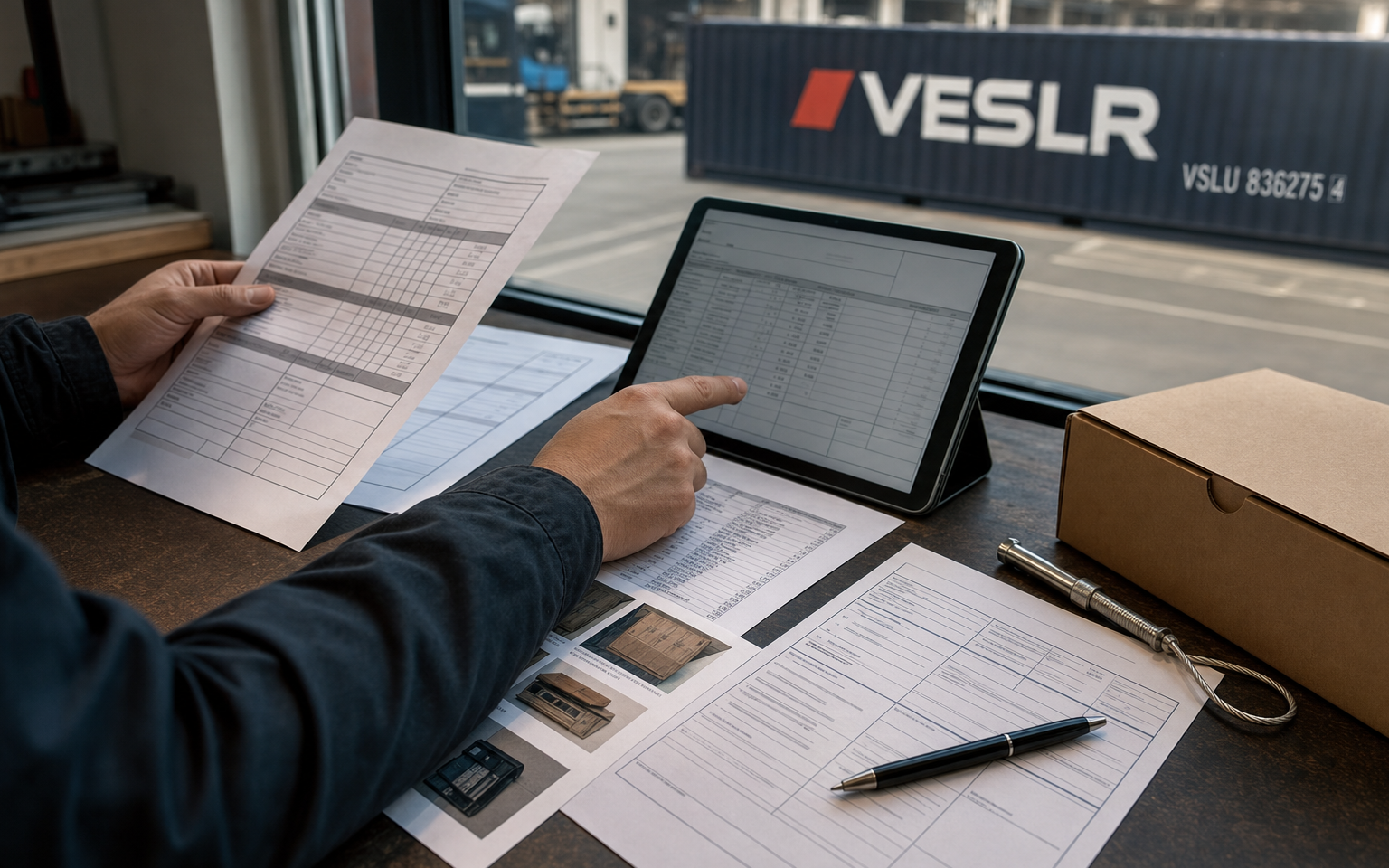
Place the purchase order, invoice, packing list, inspection report, booking and draft transport document side by side. Check legal names, addresses, product descriptions, model numbers, currency, quantities, package counts, weights, marks, Incoterm, origin, destination and any container or seal data available. Differences are not always wrong—the invoice and transport document serve different purposes—but they should be explainable. Keep version control: label drafts, record approvals and avoid sending several contradictory files in parallel. Share the destination pre-alert with the broker before arrival and respond quickly to requests for corrections or originals. Store payment, supplier-verification and insurance records with the shipment file. After clearance, retain the final entry and cost documents according to applicable business and legal requirements. The goal is not a beautiful folder. It is a defensible, usable record of what was bought, shipped, declared and received.
First China shipment document review
- Destination-specific document list confirmed before production ends
- Commercial invoice matches the genuine transaction
- Packing list uses final package counts, weights and dimensions
- Transport-document draft reviewed before cut-off
- Origin, conformity and product evidence verified where required
- Names, descriptions, quantities and values reconciled
- Original or electronic release method understood
- Final documents shared securely with the destination team